Zennaxx

Tag: app development

  • How Much Does Tour & Travel App Development Costs

    The recent report from Statista suggests significant revenue growth in the travel and tourism industry post-pandemic. so Exploring travel app development cost can be beneficial.

    The numbers indicate that in 2024, the market may reach US$927.30 billion, with an annual growth rate of 3.47%, possibly hitting US$1,063.00 billion by 2028.

    The hotel market, a key segment, is projected to reach a market volume of US$446.50 billion by 2024.

    The hotel market is predicted to reach 1.4 billion users by 2028, with a user entry rate rising from 25.9% in 2024 to 28.1% in 2028.

    These figures indicate opportunities for travel companies to leverage customized travel apps and capitalize on this growth.

    Let’s explore how tailored travel app solutions can help your business thrive in this exciting landscape.

    So, this travel app development guide will help you with precise travel app development cost and the future of travel app development.

    Why must you create a travel mobile application if you think your website is running well? In this blog, we give you more insights into this universal question.

    Travel Booking App Development Cost

    Why Develop an App when you have a Travel Mobile Website?

    The decision to create an app when you already have a travel website is based on meeting traveler expectations and optimizing user engagement.

    While mobile websites offer convenience and accessibility via URLs, the app experience provides unique advantages that cater to travelers’ needs.

    Research shows that 58% of travelers prefer apps to search for flights and 53% favor apps for finding accommodation.

    Travelers are drawn to apps because of their speed and seamless user experience (UX), making them the preferred option for travel-related activities.

    Travel apps allow travel brands to match consumer expectations, driving more bookings and adding ancillaries for longer-term value.

    Push notifications, a helpful app feature, keep travelers informed and engaged throughout their journey with trip-specific updates and promotions.

    Apps also promote traveler loyalty through automatic log-ins, trip details, air miles, and account management, providing a more personalized experience.

    With apps, brands can interact with travelers throughout the trip, enhancing engagement. In short, it generates more connectivity and revenue than travel app development cost.

    A Few More Stats About The Travel App Industry

    The general adoption of smartphones and social media has dramatically encouraged the travel business in the last few years.

    As more travelers book their lodging, tours, and flights through mobile applications, the travel industry becomes more efficient and convenient.

    This increase in app usage has resulted in growing competition between app developers and travel brands.

    Here are some notable statistics that underscore the rapid evolution and potential of the travel app industry:


    • 61% of US travelers now book their tours and travel through smartphones, indicating a strong preference for mobile convenience.

    • In the next three years, 84% of global airlines plan to integrate AI technology, which will further enhance the travel app experience with intelligent, personalized features.

    • 26% of travel application development companies will leverage chatbots in their apps to provide real-time support and automated assistance, enriching the user experience.

    • Nearly 21% of global travelers have used travel agent mobile applications to make secure payments through integrated payment gateways, reflecting the growing trust in mobile transactions.

    So this is the future of the travel industry, and it will grow more in the coming years if you want to take advantage of this flow but need to be aware of travel app development costs and methods.

    Don’t worry; stick to the blog till the end, and we’ll clear up everything in this blog.

    Top Players of the Travel Booking Sector

    A few major players dominate the travel booking app sector. Simple applications enable users to reserve hotels, flights, rental cars, and more.

    Here are three top travel booking apps:

    Booking.com

    Booking.com is a viral app among travelers because of its vast travel connections.

    It is a trustworthy platform for booking hotels, flights, car rentals, and attractions all on one platform. It also provides personalized recommendations and booking discounts to keep users returning for other deals.

    You can also read verified guest reviews and make flexible booking arrangements.

    Airbnb

    Airbnb’s app connects travelers worldwide and shares a unique experience. It connects small businesses to luxurious hotels and creates a unique platform to find a stay.

    Airbnb offers many travel experiences and activities. It goes beyond accommodations and makes trips more immersive.

    Expedia

    This application is also the same as booking.com. It also links travelers to manage every activity from one platform.

    Travel planning is easy because you can manage your reservations and plans with just one app.

    The app provides exclusive deals, promotions, and a rewards program for returning users.

    The apps provide convenient, personalized travel bookings, making it easy for users to plan trips and find the best options.

    Different Types of Travel Mobile Applications

    Numerous travel apps allow people to plan their trips and offer different services. Some book rooms for you, while others check the roads and traffic.

    Knowing all these factors can simplify the traveler’s problems. Let’s explore the various types of travel mobile apps.

    1. Travel Planning App

    Travel planning apps allow users to find affordable travel packages, make reservations, and plan a safe trip.

    Users can also read reviews from others before booking. It helps create a proper plan for traveling from one destination to another with a proper map and time.

    It manages the time, plans according to the budget, and has flexible moving times.

    Travelers can make future itineraries for their travel expenses and time management.

    2. Flight Booking App

    Flight booking apps compete by offering budget-friendly tickets. Users can compare costs across different airlines and use promo codes for discounts.

    This application gives notifications when flight rates go down or up. It provides a perfect discounted offer and gives reward points for making other bookings.

    It also remembers your flight schedule and arrival time so travelers can attend their flight.

    3. Accommodation Booking App

    Accommodation booking apps connect users with property and hotel owners in a specific area.

    Users can compare the prices and amenities of different accommodations.

    Accommodation booking applications work on the right people’s trust and reviews.

    Travelers prefer a more real-life experience when it comes to choosing accommodations.

    4. Navigation App

    Navigation apps guide travelers from airports or stations to their destinations in a city.

    These apps offer the quickest, congestion-free routes. It provides features like offline data; travelers can save the map before the trip.

    Some applications give features like pinpointing the destination, and some places are between the routes.

    5. The Travel Guide App

    Travel guide apps help travelers find events, entertainment, cities, and restaurants in a specific location.

    The app provides personalized results based on search preferences. This application contains a lot of data for every place and guides travel in the right direction.

    The basic types of travel apps are the most used in the travel industry. This is the right fit for travel app development and a successful travel application.

    Understanding the travel app development cost is crucial for planning and budgeting effectively.

    Integrating features like real-time availability, price comparison, and secure payment gateways are crucial for such apps.

    How to Build a Travel Booking App: Must-Have Features to Implement

    Travel app development costs are based on the three sections. You can manage this by selecting the right viable features in the travel application.

    It can control your travel application development expenses, making it fast and flexible for travelers.

    So before we start developing, a clear graph of development and features gives a better understanding of the cost for travel app development.

    Customer Panel Travel App Features

    The customer panel is the face of your travel application. So, to make your travel application successful, be sure you can satisfy every traveler’s demand.

    Choose every related option to make your customers satisfied and loyal to your brand.

    1. Search Functionality

    Invest time and money in improving the travel application’s search functionality. Customers can easily explore worldwide destinations depending on the service areas and search.

    Integrate common search queries and forms to match travelers’ everyday expectations. Travelers can find every query they look for in their application search.

    It provides transport and stays from cheap to high as per user need.

    2. Hotels Tab

    The hotels tab should provide users detailed information such as accommodation options, room availability, prices, amenities, and reviews with a single tap.

    To avoid confusion, keep your descriptions thorough and precise in every section. Show the rules and regulations of hotels and provide every facility the traveler can get from booking through your application.

    Please give them a review bar to rate the properties and review the comments before booking hotels.

    3. Flight booking management

    Provide passengers with up-to-date flight information via APIs, such as single- or round-trip options, seating configurations, and availability.

    Offer a range of options to comply with varying client preferences. Sent the cheap ticket notification and shared the travel updates based on the traveler’s location.

    4. Trip Details

    Include a section where users can view their trip history and upcoming trips. This is a valuable resource for future travel.

    From this detailed feature, travelers can get a report of their travel experience and everyday expenses. Also, it helps to give reference to other travelers.

    5. Currency Converter

    If your app supports international travel, include a currency converter for accurate conversions. It helps travelers check the value of money from every corner of the world.

    Money converters help travelers plan their international trips with easy budget calculations. Maintain real-time updates to maintain accurate booking costs.

    6. Contact Support

    Make sure you provide users with assistance when they need it. A chatbot can answer basic travel-related questions even without direct human interaction.

    Also, an emergency call facility should be provided for users needing immediate assistance. This will make travelers feel more supported and confident when using your app for international adventures.

    7. In-App Payment

    Provide safe in-app payment methods so users can quickly pay for bookings through the app. Use the secure payment option with its high security and flexible layout to make payments quick and safe.

    Travelers may always choose the application that offers flexible payment options for booking hotels and transportation without any other hassle.

    8. Push Notifications

    Push notifications are essential for keeping users updated. They can inform travelers of any critical updates or changes to their travel plans, such as room availability, booking changes, and special offers.

    Push notifications are the traveler’s best friend. Provide an engaging push notification about the next move, like picking up the bus or booking the room before it sells out.

    9. Upsell Features

    Consider the following features that can improve the user experience and engagement:


    • Bundle Deals: Offer combinations like flight + hotel or motel + car to simplify trip planning.

    • Car Booking: Facilitate transportation in a foreign country.

    • Things to Do: Provide insights into local events and activities based on their location.

    • Travel Insurance: Include a travel insurance option to improve the security and comfort of your trip.

    Property Agents Panel Features:

    What should be included in the travel app agent panel? We’re linking to hotels or transport companies that provide services through your app.

    We’re linking to travel companies and local travelers that offer flexible transportation.

    We provide them with a flexible and simple admin panel to manage everything and register properties and services easily.

    1. Property and Package Management:

    Owners of trip packages or property managers can manage their offerings with this application.

    They can easily adjust dates, room availability, guest counts, and payment information.

    They can implement discounts and offers based on their business needs.

    Provide communication channels or platform details for travelers so they can connect easily with the property manager with straightforward bookings.

    Make sure it is simple to manage for anyone with a basic understanding of business.

    2. Booking Management:

    Property managers can process booking requests and decide whether to accept or reject them based on their needs and preferences, such as room type (smoking or non-smoking).

    They can manage requests, add days, and add extra-hour charges. They can filter the requests based on availability and set up automatic responses for quick communication with travelers.

    Property managers can track booking history and generate reports to analyze the business.

    3. Payment Management:

    Property managers can easily collect guest payments using credit cards, PayPal, or bank transfers.

    They can also automatically create invoices and receipts for every reservation to maintain accountability and transparency in financial transactions.

    Property managers can also set up payment reminders and alerts to avoid delays or missed deadlines. It makes monetary management easy for property managers.

    4. Analytics and Reporting:

    Managers can access a dashboard that provides information about their properties or packages.

    This includes booking trends, reviews, and payment information, which helps them make informed decisions to improve their services. Give different filter options to make the analysis more in-depth and enhance the business.

    Because of long-term study, the property manager can understand the traveler’s requirements and adjust them to their flexibility.

    Admin Panel Travel App Features

    Here are some important features for an admin panel in a travel app to help manage customers, agents, and advertisements:

    1. User Management:

    This allows the administrator to manage all aspects of the customer’s accounts, such as their information, payment methods, and bookings. Assuring customer satisfaction with the app and organizing bookings are its two main functions.

    2. Agent Management:

    his allows the administrator to manage agent information, such as properties and packages. The administrator can verify that the agents and properties meet the app’s requirements.

    3. Advertisement Management:

    The advertisement administrator has control over the app’s advertisements. They make sure the ads are accurate and follow the app’s rules, helping to keep the app’s content high-quality and trustworthy.

    Ready to Transform Your Travel Business?

    Reach out to us for a consultation and discover how we can help you expand your travel business through a powerful, feature-rich app.


    Book your free consultation

    Factors To Consider While Developing a Travel App

    No matter how good your app idea or travel app features and functionalities are, they’re only worthwhile if they add value to end users. When creating a travel application, you should consider the following factors:

    1. Understanding the user’s needs and market

    If you follow market trends or want to make a business from travel applications, you must understand the business base before finding the cost of a travel development app.

    Understand the current market situation, and then plan your product roadmap for the travel application.

    It would help if you also understand your client’s needs and whether your app would solve the problem. Find the answer to some of the questions below for a clear vision.


    • Who is your target audience?

    • What is the purpose of developing a tourism app?

    • Will you get better results from your app?

    • What kind of app should you look at first for travel?

    These questions will help you determine the success of your travel application.

    The more you understand the market and your target audience, the more valuable your app will be when it launches.

    2. Analyzing data and researching competitors

    The travel industry has become highly competitive as mobile applications have opened doors in every field and sector.

    Thorough competitor research and data analysis can help you learn how your competitors are currently positioned in the market and what tactics they use to dominate it.

    You will also learn about the market leaders’ databases and critical resources through in-depth data and competitor analysis, providing a comprehensive picture of how you can progress.

    3. Make a Wise Selection of Your Development Team

    Even if you have a fantastic idea for a travel app, your hard work and money will be well-spent if you hire a professional and knowledgeable app development team.

    Application development firms like Zennaxx can provide a feature-rich, scalable travel and transportation management app.

    Develop your pre-planned travel app or travel app from scratch with Zennaxx development.

    How to Get Hotel Listing and Real-Time Flight Details on Your Travel App?

    When you’re on a tight budget or starting a new travel company, incorporating APIs into your travel app can help you get up and running quickly.

    We’ve worked with over fifteen clients to create successful travel apps and discovered the best affiliate programs and APIs for comprehensive listings to make your job easier.

    Using these affiliate programs and APIs allows you to avoid the hassle of finding hotel partners while lowering app development costs.

    We’ve compiled a list of well-known brands that offer affiliate programs and APIs from open-source content sites that can help your app function better.

    • 1. Booking.com
    • 2. TripAdvisor
    • 3. Airbnb Affiliate Program
    • 4. Agoda Affiliate Program
    • 5. Google Maps API
    • 6. Amadeus API
    • 7. Zomato API

    These resources help you simplify the process of providing users with a smooth travel experience and the best hotel deals.

    The Probable Tech Stack of a Robust Travel Booking Application

    The Probable Tech Stack for a Robust Travel Booking Application:

    1. Application and Data

    Consider programming languages and tools such as Python and Java to build a mobile version of a travel booking app.

    Hosting the application on platforms like Amazon EC2 and utilizing data storage solutions like Amazon S3 can provide reliability and scalability.

    Tools such as Apache Impala, Scala, and Kafka can be useful for handling data processing and analytics.

    2. Location Tracking

    Accurate location tracking is vital for a smooth user experience.

    Ensure your app can track user locations effectively through GPS or other tracking methods to help guide users through their travel journey.

    3. Cloud Services

    Given the diverse data requirements of travel apps, cloud services are essential.

    Providers like Amazon Web Services (AWS) or Google Cloud offer secure, efficient storage and access to large volumes of data.

    This facilitates real-time information transmission, ensuring a responsive app experience.

    4. Real-time Analytics

    Continuous improvement requires constant monitoring of app performance. Tools like Google Analytics, Flurry, or Localytics can monitor user behavior, performance metrics, and trends.

    This will help you read customer behavior and make changes according to customer needs.

    5. User Verification

    To maintain app integrity and user trust, implement verification measures using email, phone, and SMS APIs. This helps authenticate users and keep your app secure.

    6. Database

    A robust app relies on a solid database structure. Options such as Aerospike, MongoDB, Cassandra, HBase, MySQL, and Postgres offer a variety of scalability, performance, and data management advantages.

    There are some of the best databases you can choose to reduce costs.

    Travel App Development Cost Estimation

    You have the right idea about features and using technology in developing applications. It’s time to get a cost estimate for developing the application.

    Here are some factors that affect your estimated cost of a travel app development. So, let’s review them one by one.

    Consider the above factors to get a more accurate cost estimate for your travel app release. These factors will either raise or reduce the cost of a travel app development.

    1. Location of the Agency

    The location of the development company you’re considering for the project will affect your cost. It significantly affects the overall expenses.

    Hourly rates typically decrease as you move from Western to Eastern countries.

    You can expect to be paid more per hour if you work for a company based in Australia or the United States.

    It could be $70 to $100 or increase with the organization’s location and years. Working with an Indian agency may result in less expensive solutions.

    Their hourly rates are typically between $30 and $80. This price difference is dependent on location.

    2. Backend Architecture Choice

    Aside from geographic considerations, the choice of backend architecture significantly impacts the travel app development cost.

    Backend architecture is primarily concerned with deciding between monolithic and microservice frameworks.

    Choosing a microservices architecture may result in higher initial costs, but it also provides improved scalability and future-proofing.

    Conversely, the monolithic approach tends to be more cost-effective upfront but may need to be revised regarding scalability and adaptability to future needs.

    Thus, choosing between these architectures impacts the immediate development costs and shapes the app’s long-term viability and ability to adapt to evolving requirements.

    3. Technology Incorporation

    Using new tech to attract users is key. It sets your travel app apart from the competition. But, the average app cost will rise.

    This will happen if cutting-edge technologies like blockchain, the Internet of Things (IoT), Augmented Reality (AR), and Virtual Reality (VR) are added.

    These features could increase user engagement and offer unique experiences. But they require special skills and resources. This adds to higher development costs.

    When pursuing a tech-boost strategy, you must weigh the benefits against the costs. You must also ensure that you meet your budgetary constraints and business objectives.

    4. Travel Booking App Design and Development

    When development of a travel app, it’s important to remember that mobile app design costs significantly affect the overall cost.

    While animations and videos can increase user attraction to your application, they also cost development.

    We recommend starting with basic animations and simple vectors for your app design.

    You can progressively improve your design style as your app becomes more well-known and has higher download rates.

    Using this approach, you can control costs and maintain a compelling user cost of developing a travel app, which usually ranges from $100,000 to $130,000, depending on several variables and features.

    It’s important to remember that this estimate may change depending on the features and requirements of your app.

    It’s best to list your requirements. Then, work with developers to check they fit your budget and goals.

    Cost of travel app development

    Advantages of Travel Industry Software Solution

    Travel apps have entirely changed the tourism landscape. They’ve made it incredibly simple to book trips and plan their adventures.

    Now, let’s look at the fantastic benefits these apps provide!

    1. Easy Accessibility

    The travel apps on your phone give you instant access to a wealth of information. Everything is available, from flight prices and schedules to hotel options.

    No more waiting on hold or visiting travel agencies—booking tickets online is now as simple as a tap. Using this application, you can handle everything alone without anyone’s help.

    2. Advanced Customizations

    Travel apps are well-known for their advanced customization features. This means that users can fine-tune the settings to match their preferences exactly precisely.

    These apps also keep up with the latest tech trends, growing to meet the diverse needs of travelers.

    This flexibility makes every user’s journey more pleasant and seamless, guaranteeing a customized experience for each user.

    3. Effortless Maintenance

    Regularly updating travel mobile apps makes it simple to keep them up to date. 

    They efficiently manage, track, and refresh all data, ensuring users have the most up-to-date information. 

    Furthermore, with seamless maintenance, users can rely on these apps for smooth and dependable travel experiences.

    4. Instant Booking

    The Traveler app can help travelers manage hotel and transport bookings if they want to go anywhere.

    It provides details on the introductory rate and total distance of the road. It also includes information on local areas, tourism sides, and ticket amounts over time.

    Aside from that, travelers can also take advantage of exclusive discounts to get the best deal on a hotel room, train ticket, or flight.

    Travel apps allow Travelers to book taxi rides to and from airports or train stations.

    5. Safety Information

    Safety is the priority when preparing for a travel application. Nowadays, travel apps are helpful because they give you all the latest safety information.

    This contains information that could affect your trip, such as weather updates. So, if a storm or other emergency approaches, these apps will alert you immediately.

    They also provide 24-hour access to emergency services, allowing you to feel more secure while traveling. It’s all about ensuring that travelers’ trips are both safe and enjoyable!

    Learn how to make an app like Uber: process, costs, and tips. Start your ride-hailing app development journey now!

    How to Make Money on Your Travel Booking App?

    Now, it is time to learn how to cover the travel app development cost.

    If your application is performing best in the market and you have a lot of users, it is a good sign that you can earn money from this successful project.

    But you must know how to get a return by providing travel details to the public.

    1. Merchant Model

    Purchase tickets and bookings directly from suppliers and then resell them to users.

    Please take advantage of lower prices and make money by selling at a markup when they buy in bulk.

    This trick allows you to adjust your profit margins according to market conditions.

    2. Commission Fees

    The commission charge model, suggested by Booking.com and Goibibo, allows you to make money by charging hotels or travel planners a fee to be displayed on the app. 

    This means you will receive a portion of the booking fee whenever someone books a hotel through your app.

    You increase profitability by providing your customers with highly flexible services and various booking options.

    3. Advertisement Model

    The advertising model is one of the most profitable options for covering the cost of developing travel applications.

    Small OTAs particularly favor this model. It lets you make money by charging airlines and hotels for ad space in your app. The model typically works on a cost-per-click basis.

    According to last year’s statistics, mobile travel sales had reached $343.3 million by the end of 2023, further showing the profit potential of using such models.

    How to Stand Apart from the Rest in the Crowded Travel Booking Sector?

    Thousands of competitor websites and applications offer the same services.

    To stand out in the crowded travel booking sector, you must upgrade your project and provide better services. Your application must also offer the best deals and a flexible travel experience.

    If you have any ideas outside the box, contact us to get the cost of Tape app development from our manager.

    Find a New Niche Travel Application Market

    Travel to Western Europe, North America, and the Asia-Pacific region is already very popular.

    Do you want your app to stay visible among the crowd? Instead of concentrating solely on those popular destinations, why not explore a new niche?

    You could provide places based on special events like the Oscars or the Commonwealth Games.

    You could also cater to different interests, such as those who enjoy relaxation, nature, or history. You’re thinking outside the box and looking for unique places or themes open to tourists.

    Use Disruptive Technologies to Better Customer Experience

    Implement new technologies and upgrade your travel application using today’s generation and devices. Technology is more important.

    Technology is critical for any latest online travel agency (OTA) looking to make an impact in the market. It may raise the cost of developing a travel application, but this will put your application at the top of the market.

    AI and machine learning

    Use AI-powered recommendation engines to provide personalized travel recommendations based on user preferences, browsing history, and previous bookings.

    Understanding customer movements is beneficial when taking on a large business.

    Virtual reality (VR) and augmented reality (AR)

    Integrate VR/AR features to provide users with immersive previews of destinations, accommodations, and activities, allowing them to experience potential trips before booking.

    If users get a better overview, they will not decide on only images.

    Blockchain Technology

    Use blockchain for secure and transparent transactions, loyalty programs, and identity verification, increasing user trust and security.

    Voice assistants and chatbots

    Integrate voice-enabled search and AI-powered chatbots to provide instant assistance, answer questions, and streamline the booking process, improving the overall user experience.

    Also, travelers can send any urgent message or feedback by only saying so on the application.

    It makes travelers’ lives easy with packing; they ask for the next bus or destination to stay at as they want.

    Start Your Travel App Project With Zennaxx

    Creating an excellent travel app is about making travel quick and simple for users. To develop a travel app, you’ll need a smooth search engine, a simple layout, precise information, some personalization options, and reliable payment methods. Remember, however, that technology and trends are constantly changing.

    Mobile and web apps continue to improve as users demand more from them. Monitor your app’s performance and what users want in terms of flexibility.

    If you’re looking for a professional development company and understand the travel app development cost, we’re specialists in creating excellent mobile and web apps. 

    We’ll be with you to guide you even after your app is live. We will continue to help you upgrade your application to meet changing demands and technology. Contact our tech experts to understand the process and travel application development expenses.

    FAQs


    • Is creating expensive travel apps profitable?

    • Your business can profit from travel apps. Add software to your travel agency to boost revenue. Travel applications could reach $927.30 billion by 2024, expanding 3.47% annually. Thus, a well-built travel app can be lucrative.

    • What factors affect the cost of developing a travel app?

    • Travel app development costs depend on the agency’s location, backend option, technology, and design and development requirements.

    • What are the must-have features of a successful travel booking app?

    • It involves rigorous searching. It lists hotels thoroughly. You can book flights and vacations. Currency converters are included. It supports customers. A secure in-app payment system. Push notifications deliver information and special offers.

    • What is the revenue model for travel booking apps?

    • Various monetization tactics might produce revenue for travel booking apps. The merchant model involves suppliers buying tickets and bookings and reselling them to customers at a profit; commission fees involve hotels or travel planners paying for app bookings; and advertisement models involve airlines and hotels paying for app ad space.

    • How can a travel booking app stand out in a crowded market?

    • To differentiate your vacation booking app, try new niches. Consider targeting certain demographics or hobbies. Additionally, disruptive technologies like AI, VR/AR, blockchain, and chatbots can improve user experience and differentiate your app. You must update your app to satisfy user needs and make a backup for technology upgrades.

    Read Also:


  • 13 Software Development Best Practices You Can’t Miss in 2024

    Summary:

    To ensure successful software development projects in 2024, follow key best practices like DRY, testing automation, version control, and security measures. These practices eliminate repetitive tasks, identify bugs early, and improve quality. By adhering to these practices, you can save money and ensure project success 

    Advent of new innovations like generative AI has only strengthened the need for robust software development. However, such integrations and demands of advanced functionalities in the market is making the software development a complex process.

    So, why and how to ace software development?

    Addressing the why first!

    Gartner report indicates that enterprise software development spending will increase to $1,029,421 million by 2024 growing at 12.7%. So, if you want to save money on your software development projects, you need to strategize it.

    Now to the second question- HOW?

    This article will answer how to ace your software development with the best practices you can implement for your projects. 

    Software-Development-Best-Practices

    1. DRY principle

    Don’t Repeat Yourself or DRY is a software development best practice that eliminates the need to apply logic to each change in the system. It aims to reduce repetitive tasks and the need to make changes at every place where logic is applied. DRY works on the simple principle of not repeating the same coding task each time.

    DRY, formalized by Andy Hunt and Dave Thomas in their book “The Pragmatic Programmer,” is one of the most used software development best practices. One key aspect of software development is designing classes. DRY allows you to reduce the repetition of logic implementations in multiple portions of the code.


    • It allows developers to create an abstraction layer of standard, functionality and implement specific portions of code.

    • Dry also improves the readability of code, eliminating the need to write comments explaining the necessity of variables.

    • Further, it helps reduce unnecessary attribute creation in tables, making the database far more efficient.

    2. YAGNI principle

    YAGNI (“You Aren’t Gonna Need It”) is a practice of leveraging Extreme Programming(XP). This principle allows you to focus on core features and avoid spending time developing additional features. It ensures that your core functionality is first developed and tested, reducing resources spent on non-essential features.

    This principle helps simplify the code by reducing the need to create codes for non-essential functions. It also reduces the complexity of integrating more features and ensuring communication across APIs and databases.

    3. Testing best practices

    Testing is an essential element of your software development best practices checklist because if you don’t test the product well, it can lead to problems like bugs, errors, and impact on user experience. So, the best approach is to test it properly and create a strategy for reliable software testing. Here are some best practices for software testing that you can use.


    • Testing automation is one of the significant software development best practices for reducing product testing time. It also helps reduce manual efforts, allowing developers to focus on innovation and developing core business functions.

    • Pair programming is where two programmers work collaboratively to ensure better results. One of the developer’s codes and the other assesses, evaluates, and decides on possible trade-offs before finalizing the release.

    • Test-driven development(TDD) is an approach that emphasizes writing tests before creating the source code for software. The core method of TDD is to ensure that every piece of code is tested first, even before it’s written. It follows an iterative cycle called the “red-green-refactor” cycle. In this approach, you create automated tests that define the code’s specific behavior.

    software development practice

    4. Version control

    Version control systems help you track the progress of your software coding throughout the SDLC. It maintains the record of every iteration with release details, timestamps, and configurational changes. Version control is crucial for your business because it lets you track whether your releases work successfully across devices, platforms, and operating systems.

    So, if a newer version of the software or a feature has issues on a specific platform, you can track the cause of concern and what changes in code are not working properly. 

    Software development teams can understand the evolution of features by reviewing earlier versions and pinpointing specific flaws. This means if you are preparing a software development best practice checklist, version control becomes a crucial part.

    5. Pay attention to style guides

    Paying attention to the branding style for your software development is important for the front end and back end. It ensures code consistency, readability, and maintainability for your software development process.

    Whatever programming language you use for software development, each has a specific style guide, and while it’s not a compulsion to follow the same guide everywhere, consistency has merits.

    For example, if you are following a specific style guide, it becomes easy for onboarding new developers to understand the documentation and quickly start coding.

    The software development process can get slow and tedious without a proper style guide. However, you can use a linter tool for static code analysis.

    Planning software development?

    Ready to elevate your software projects? Partner with us for seamless software solutions.


    Book your free consultation

    6. Naming conventions

    When it comes to efficient coding as a software development best practice, naming conventions become crucial. It provides a framework for naming variables, functions, classes, and other code elements.

    When a codebased does not have consistent naming, it can make the code hard to understand, debug, and maintain for teams. Proper naming convention avoids confusion and makes the function of all code elements clear for developers.

    Here are some key naming convention aspects, 


    • It improves code readability through proper naming conventions which is easy to decipher for developers.

    • Evolving codes require consistent naming which allows new developers to quickly accalamitize with the process flow.

    • Proper naming also helps avoid bugs which often stems from confusing code names.

    • Teams can collaborate better with the right naming conventions making task distribution and tracking easier.

    • Large and lont-term projects need naming which is easy to understand over a longer period with increasing code structures.

    7. Design before coding

    Designing your functions, features and making objectives clear to the team is crucial before you start coding. If not done prior to the coding phase, it can lead to several issues, and you may not be able to achieve the business goal.

    Making important decisions like architecture design, database structure, backend frameworks, and API integration flow needs to be finalized before you start coding. If not done before coding, retrofitting can be complex and tedious for software development teams.

    8. Don’t push too many features

    Have you ever boarded an ovrerloaded plane? Chances of landing safely goes haywire when you have too much baggage onboard and same is with software development process. Yes, if you try to add too many features and launch everything together, chances of errors increases multifold.

    The best software development best practice in this scenario is minimum viable product(MVP). This is an approach where you build a shippable version of the software with the minimum features needed for it to function.

    This reduces the need to code extensively and launch everything together. Rather you can first release core functions and develop non-essential features gradually releasing with each iteration.

    9. Maintain staging and production environments

    Maintaining your staging and production environments can help reduce errors, improve user experience and lower your operational costs. Staging environments allows testing the code, builds and updates in a production-like environment before you deploy the software.

    This improves the user experience by ensuring every function works well and is highly responsive. It also allows you to detect the errors early and reduce operational costs preventing costly downtime and maintenance.

    Staging environments mirror the production environment and help in understanding how software behaves in specific scenarios. Using this software development best practice you can ensure high quality product delivery that is resilient and performs better in every scenario.

    10. Carry out code reviews

    Code reviews are like product checks that ensure your software is ready to cope with user requests and function as per need. In other words, it’s like taking a ride of the car after being manufactured, ensuring the engine offers the performance required.

    Source

    And it is also similar to on-ground engine checks that engineers do before a plane takes off. Reviewing the code is crucial because you don’t want a software in the market that does nothing!

    But is that all?

    No! Code reviews do more than just check your software does what it is meant to do.


    • It helps teams create documentations to improve collaborations and improve knowledge sharing

    • Enables developers to maintain coding standards adhering to industry standards

    • Ensures robust software delivery and user experience

    11. Use The Right Framework

    Frameworks are your structured guide ways that help streamline processes, coding flow, and offer consistent style guides. Further, it provides pre-built components and functionalities which enables you to build web apps rapidly.

    Integrating frameworks into your software development plan is key to streamline workflows, ensure quicker time-to-market and quality. So, how to choose the right framework for software development?

    Here are key pointers to have in your software development best practices checklist while choosing a framework,


    • Select the framework that aligns with the programming language your team knows of.

    • Compare framework options based on scalability needs, features, project scope, and size.

    • Ensure you choose a secure framework that helps protect sensitive information through higher security features.

    • Look for a framework with a massive community that helps you resolve key issues with the software.

    12. Keep Documenting Your Progress

    Documenting your progress is not just crucial for new developers coming on board but also for refactoring features as and when needed. Imagine you have issues with specific features not working on specific versions.

    Identifying the changes implemented and tracking deployments back in time can be difficult without documentation.

    13. Use a Virtual Machine for Sandboxing

    Using a virtual machine to leverage sandboxing is one of the secure software development best practices that you can use to isolate environments. This isolation allows you to test software and find the root cause behind anomalies or specific changes in the software behavior.

    You can run code in a virtual machine and identify potential issues with software security. It also helps you to find vulnerabilities and threats within the sandboxed environment which are otherwise complex to look for while connected with servers.

    Further, it allows developers to emulate specific scenarios and operating system environments to understand how software behaves. By sandboxing you can ensure effective testing without disrupting the operational flow.

    Following software development best practices

    In the end, it’s all about execution! How well you plan your software development does not make that huge a difference if your execution is flawed. This is where software development best practices like designing for code, choosing the right framework, optimizing the staging environments, reviewing code, and sandboxing can help.

    Creating a cohesive software development strategy, including best practices that best suit your project, can yield results in sync with your organizational goals. This is where you need a strategic software development company like Zennaxx that,


    • Analyzes your requirements

    • Understands the business goals

    • Designs your software development plan

    • Leverages software development best practices

    And delivers exactly what your business needs! Get your estimate and start your software excellence journey.

    Frequently Asked Questions (FAQs)


    • WHAT ARE THE 5 SOFTWARE DEVELOPMENT PHASES?

    • Typically five software development phases in an SDLC are, requirements gathering, software design, development, testing, and maintenance.

    • WHICH SDLC MODEL IS BEST?

    • The SDLC model, which is most popular and considered efficient for organizations, is Agile. It follows the approach of incremental iterations, early delivery, and continuous improvement over the conventional waterfall method.

    • WHAT ARE THE LEVELS OF A SOFTWARE DEVELOPER?

    • Three levels of software development based on experience are junior, mid-level, and senior. Junior developers have 1-3 years of experience, mid-level developers have 3-8 years of experience, and seniors have more than 8 years of experience developing software.

    • WHICH FIELD IS BEST FOR SOFTWARE DEVELOPERS?

    • Software developers can explore different fields for better growth opportunities. However, in recent times, times web app development has piqued interest, and with integrations of innovations like generative AI, web app development has become more attractive for software developers.

    • WHICH SOFTWARE SKILL IS MOST IN DEMAND?

    • Full stack software development is one of the most demanded skills in the market right now. As full-stack developers are capable of working on both front-end and back-end, it is a far more efficient way for businesses to develop software.

    Read Also: 

  • IoT in Manufacturing: Key Benefits, Use Cases and Trends in 2024

    The manufacturing sector worldwide has faced several roadblocks over the years, especially with the disruption of supply chains.

    Whether caused by a hurricane or a pandemic, supply chain disruptions are becoming more frequent and severe. Using the Internet of Things(IoT) in manufacturing use cases can help reduce downtime and ensure lower disruptions.

    But how?

    And why is it worth your money?

    To understand the benefits of IoT in the manufacturing sector, you need first to analyze the key drivers of its widespread adoption.

    A key driver is traceability!

    Remember that sudden breakdown in your doughing machine disrupting cookie manufacturing?

    An IoT-based device can help you trace the real reason behind that breakdown in seconds.

    The benefits of IoT in the manufacturing sector are not restricted to traceability and go beyond.

    This is why the market for IoT in the manufacturing sector is expected to grow at a CAGR of 25.53%, with revenues rising to $1.22 trillion by 2029.

    Despite being an attractive option for many businesses, there is skepticism! This article will discuss important aspects of using IoT in the manufacturing industry and its benefits and challenges. First, here is an overview of IoT usage in the manufacturing industry.

    • The global IoT in Manufacturing Market size was valued at USD 50.0 billion in 2021 and is expected to grow at a CAGR.
    • 11.9% to USD 87.9 billion by 2026.
    • 12.3% to USD 122 trillion by 2029.
    • Studies suggest that IoT can lead to a 20-30% increase in productivity for teams adopting automation practices.
    • Studies suggest an average ROI of 200-300% for successful IoT implementations in manufacturing.

    iot in manufacturing

    IoT in the Manufacturing Industry

    IoT in the manufacturing industry is transforming digitally with the introduction of IoT devices. These devices are a network of physical objects embedded with sensors and software.

    IoT devices enable manufacturing units to connect and exchange data across different equipment over the Internet. This connectivity allows manufacturers to collect and analyze valuable data remotely, improving operational efficiency, quality, and productivity.

    This has led to

    • Streamlined production processes,
    • Real-time insights into operations
    • Predictive maintenance,
    • Reduced downtime

    IoT in the Manufacturing Industry

    Source

    This is why the adoption of IoT in the manufacturing industry is gaining more traction, with a CAGR of 9% in revenues and 13.4% in terms of units. With a surge in IoT installations across the manufacturing industry, the key question in your mind will be,

    WHY?

    What’s the impact of using IoT devices in manufacturing?

    Here are the answers you are looking for!

    How IoT is Transforming the Manufacturing Industry

    IoT devices help manufacturing plants track, trace, and rectify key machine failures to reduce downtime. In addition to detecting equipment failures, IoT devices also help predict failures, improving maintenance efficiency.

    Some key transformative use cases of IoT in the manufacturing industry are:

    1. Predicts Early Malfunctions

    Using IoT in manufacturing can help you detect machine malfunctions early, reduce disruptions, and increase productivity. Manufacturers can use real-time data insights to address potential issues and schedule maintenance strategically and proactively.

    Predictive maintenance can help improve machine lifespans and reduce the risk of failure during operations. Further, IoT adoption streamlines production processes and facilitates remote monitoring and diagnostics, leading to informed, quick decisions.

    2. Higher Margins and Customer Satisfaction Levels

    Getting higher margins and achieving better customer satisfaction are two significant challenges. Manufacturing is margin-intensive, and companies take a hit if there are higher defects.

    At the same time, providing customer satisfaction is also crucial to ensure there is no churn. A significant benefit of IoT in manufacturing is higher margins and better customer satisfaction, achieved through better visibility.

    HOW?

    Simply by offering better insights!

    You have better visibility on manufacturing defects and quality issues and better inventory management.

    So, fewer defects, high-quality products, and better customer satisfaction ensure better margins!

    enterprise software

    3. Improved Asset Management via Connected Supply Chain

    IoT devices help track assets accurately for your supply chain operations. For example, suppose you are a manufacturing business dealing with a mass product like cars.

    In that case, you need to track the accuracy of stocks, damages during delivery, and safe unloading of the vehicles.

    IoT helps businesses track inventory stocks, deliveries, and asset unloading to avoid damage. One of the key benefits of IoT in the manufacturing industry is the connected ecosystem, which helps ensure seamless operations.

    4. Implements Operational Intelligence

    IoT enables collecting and analyzing large amounts of data from the manufacturing floor in real time.

    This data-driven intelligence allows manufacturers to gain insights into every aspect of their operations, helping to optimize processes, reduce waste, and enhance productivity.

    For example, if you are running a manufacturing plant for a clothing brand, operational intelligence can help identify quality issues, reduce raw material waste, and reduce maintenance costs.

    5. Boosts Quality

    IoT sensors and devices play a crucial role in manufacturing by constantly monitoring production processes and equipment conditions.

    This provides valuable data that helps maintain operations within prescribed parameters and immediately detect deviations from quality standards.

    As a result, the manufacturing of defective products is significantly reduced, and the overall quality of outputs is improved.

    6. Improved Production Planning and Scheduling

    A significant IoT impact in the manufacturing industry is on production planning and scheduling.

    IoT devices offer real-time updates on machinery status, inventory levels, and workforce availability, making production dynamic.

    The connectivity across equipment offered by IoT enables companies to use their resources more efficiently, reducing downtime and aligning production schedules with market demands.

    7. Better Plant Safety and Security

    IoT devices have proven effective in enhancing safety measures in the manufacturing industry.

    With continuous monitoring of environmental conditions and detecting unsafe situations in real-time, alerts and trigger alarms.

    For example, sensors in manufacturing plants can detect the presence of toxic gases or extreme temperatures. Upon detection, measures can be initiated to prevent accidents or injuries.

    A significant benefit of IoT in the manufacturing industry is improved security systems. This includes the introduction of surveillance cameras, motion detectors, and access controls to prevent unauthorized access.

    8. More Safety in Operations

    IoT ensures operational safety by monitoring machinery and equipment for danger signs. Take an example of a shipbuilding yard where employees paint internal blocks within closed spaces.

    Colors can have toxins that can become fumes due to a lack of oxygen, leading to unsafe operations. One of the most important impacts of IoT in the manufacturing industry is reduced accidents and injuries.

    9. Predictive Maintenance

    A notable benefit of IoT in manufacturing is predictive maintenance. It helps manufacturers detect potential equipment failures before they occur.

    IoT devices are installed on machines that record all the important data, and using an AI-based algorithm, you can analyze data trends and anomalies.

    This maintenance approach helps reduce costly downtime and extend the lifespan of machinery.

    It allows you to optimize maintenance schedules and avoid unexpected repairs. It also helps you save costs and increase machine availability, which is crucial for efficient operations.

    Ready to revolutionize your business with IoT technology?

    Contact us now to explore how IoT can transform your business!


    Book your free consultation

    Image CTA

    Exciting IoT Use Cases in Manufacturing

    Innovations like IoT devices, digital twins, and remote monitoring software have significantly enhanced manufacturing efficiency.

    1. Remote Monitoring

    Remote monitoring is a process that involves IoT sensors that gather data from different assets, such as machinery and production lines.

    Custom software then fetches this data, which helps teams monitor equipment usage and current condition.

    This is especially useful in cases like the manufacturing of temperature-sensitive products.

    2. Digital Twins

    Digital twins are advanced virtual models replicating physical assets, processes, or systems. You can use IoT devices as digital twins to improve machine monitoring and inventory management.

    You can employ internet-enabled connections with sensors and IoT devices to gather real-time data and enhance process visualization.

    Manufacturers can also utilize digital twins to simulate various machining strategies, identify the most efficient methods, and optimize production lines by tracking key performance indicators.

    3. Logistics Management

    Using IoT in manufacturing enables real-time tracking of KPIs, enabling efficient logistics management. IoT-based software systems can also monitor and evaluate important aspects of supply chains.

    It also helps optimize inventory management, analyze and improve inventory flow, and enhance the supply chain management process.

    4. Manufacturing KPIs

    Implementing IoT in the manufacturing industry enables manufacturers to better understand the production process. It also helps identify optimizing energy consumption, production, and inventory opportunities.

    Integrating IoT sensors into the equipment allows the system to receive data and track KPIs continuously,

    • Overall Equipment Effectiveness (OEE)
    • Cycle time
    • Throughput
    • Capacity utilization
    • On-Time Delivery(OTD)
    • Production Schedule Attainment
    • Total Cycle Time

    Real-time examples of IoT in manufacturing

    What Software Development Steps

    IoT technology provides real-time benefits through machine monitoring for OPE/OEE, inline QA processes, and Poka-Yoke methodologies.

    Leveraging these applications, industries can effectively track and enhance equipment performance.

    #1. Machine Monitoring to Track OPE/OEE

    IoT in the manufacturing industry allows you to optimize production processes and improve overall equipment effectiveness (OEE). New sensors, data gateways, and software allow real-time data collection directly from machines, enhancing OEE evaluation.

    Machine monitoring systems using IoT technology can also help enhance production efficiency, planning, and demand forecasting.

    IoT Trends in Manufacturing for 2024

    Adopting new technologies can provide numerous benefits to the manufacturing sector, including improved safety, efficiency, innovation, and cost-effectiveness.

    1. Employee Safety

    The integration of IoT in manufacturing focuses on improving employee safety through real-time monitoring systems.

    IoT devices ensure a safer work environment for employees by constantly monitoring data.

    IoT can mitigate potential safety hazards in the manufacturing environment, ensuring the well-being of workers.

    Preventive maintenance based on IoT systems can help monitor equipment temperature, detect malfunctions, and predict maintenance needs.

    You can proactively address safety risks, improve response times, creating a safer workplace for employees using IoT systems.

    2. Security and Privacy

    Manufacturers implement advanced encryption techniques and secure data protocols to safeguard sensitive information. However, maintaining cyber security can be challenging without proper monitoring.

    You can prioritize security and privacy in IoT systems to protect critical data and maintain the confidentiality and integrity of information.

    Incorporating advanced security measures not only helps manufacturers comply with industry regulations but also helps maintain customer trust.

    3. Machine-to-Machine (M2M) Automation

    IoT-enabled automation streamlines communication between machines, optimizes workflows and reduces downtime. Scheduling predictive can prevent unexpected breakdowns.

    Further, autonomous data sharing and activity coordination make predictive maintenance possible.

    4. IoT Blended with VR and AR Bringing Digital and Physical Worlds Closer

    Blending IoT with Virtual Reality (VR) and Augmented Reality (AR) helps bridge the gap between physical and digital assets. It enhances training programs, maintenance processes, and design phases.

    IoT-driven VR and AR solutions provide real-time data visualization, remote diagnostics, and step-by-step repair guidance.

    Challenges of IoT Adoption in Manufacturing and Business

    Addressing the challenges of IoT in manufacturing and business requires careful consideration of investment risks, strategic integration, and robust security measures.

    #1. Heavy Investment & Uncertainty

    IoT initiatives require significant investment in hardware, gateways, and sensors. Due to the dynamic nature of IoT technologies and the unpredictable ROI, some businesses may be hesitant.

    Businesses can use comprehensive cost-benefit analyses to evaluate long-term benefits. Undertaking smaller IoT pilot projects can provide insight before committing to large-scale initiatives and Implementations.

    #2. Technology Integration Challenges

    Integrating IoT technologies into existing manufacturing processes and legacy equipment may cause disruptions. The need for specialized skills and expertise in IoT technology can be a barrier.

    However, partnering with IoT solution providers or consultants can offer valuable expertise and guidance. Investing in employee training and skill development can help address the expertise requirements.

    #3. Security Concerns

    IoT systems are vulnerable to cyber threats in business and manufacturing. This poses a risk to data security, privacy, and operations. Meeting regulation standards while implementing IoT is difficult but possible.

    Implementing robust security protocols and adhering to comprehensive compliance frameworks are potential solutions.

    #4. Legacy Equipment Integration

    Compatibility issues and operational disruption can hinder the adoption of comprehensive IoT technologies.

    This is due to the lack of connectivity and interoperability with legacy systems and equipment.

    Retrofitting legacy systems with IoT capabilities can lead to operational disruptions and downtime, negatively impacting productivity and efficiency.

    To address these issues, two potential solutions are available:

    • Integrating IoT gateway devices and middleware can bridge the connectivity gap between legacy equipment and modern IoT systems.
    • Phased upgrades and modernization of legacy systems can ensure seamless integration with IoT technologies without causing significant operational disruptions.

    To Wrap it up!

    The strategic benefits of IoT in the manufacturing industry have provided productivity boosts, cost reductions, and optimized ROI.

    While there are challenges of security, technical roadblocks, and data privacy, a well-planned execution can help leverage IoT’s transformative power.

    Businesses can use IoT in manufacturing to enhance predictive maintenance customizations and formulate sustainable practices.

    Embracing IoT is key to staying competitive and thriving in the evolving industry ecosystem.

    However, beyond the sensors and IoT device systems, you also need robust software to help analyze the data, providing deeper insights through visualizations.

    This is where Zennaxx can help. We integrate IoT-based systems into your existing manufacturing units, improving ROI. So, to maximize security, productivity, and profits, get an estimate for your IoT integration project now.

    Frequently Asked Questions (FAQs)


    • What are the primary benefits of IoT in Manufacturing in 2024?

    • IoT in manufacturing can bring many benefits, including improved operational efficiency, quality control, supply chain management, and real-time process monitoring. With IoT, manufacturers can enjoy seamless connectivity and data-driven decision-making, increasing productivity and cost savings.

    • Could you provide examples of IoT use cases in the manufacturing industry?

    • IoT is used in manufacturing for asset tracking, remote equipment monitoring, predictive analytics, inventory management, and automated quality control Sensors in machinery provide real-time data for proactive maintenance.

    • What are the latest trends shaping IoT in Manufacturing?

    • IoT is transforming manufacturing with AI/ML for predictive analytics, edge computing for real-time analysis, 5G for fast connectivity, and digital twins for optimizing production.

    • How is IoT contributing to building a competitive and resilient future in manufacturing?

    • IoT enables manufacturers to be more agile and flexible in production processes, improve supply chain visibility and responsiveness, foster innovation through data-driven insights, and enhance customer satisfaction through personalized products and services.

    • What role does IoT play in addressing persistent industry challenges in manufacturing?

    • IoT is crucial for manufacturing. It enables proactive maintenance, optimizes energy usage, improves OEE, enhances worker safety, and enables real-time inventory optimization.

    Read Also: 

  • UI/UX design in Mobile App Development: Role and Importance

    The days when the desktop computer was the most popular mode of communication are long gone; today, the same desktop devices have become a secondary mode of communication.

    We used to do most of our searches on our PCs and communicate with one another using various devices.Nowadays we are always active on our smartphones, whether at home, at work, or when travelling, and it has become an unmissable part of our lives.

    If it is the case, it will be wise for many organisations looking to build a name for themselves in their respective fields. You should begin developing mobile applications and websites, which will assist you in developing a strong market presence.

    We can easily see that the market is swamped with mobile applications relating to plenty of businesses, including education, hotels, restaurants, healthcare, travel, and retail. Every day, hundreds of mobile apps are submitted to the app store.

    The worldwide mobile application market size was assessed at USD 154.05 billion in 2019 and is predicted to grow by USD 653.91 billion during 2022-2025, with a CAGR of 21%.

    This demonstrates that developing an unrivalled mobile app has become a difficult task that can only be attained if mobile app developer are willing to go outside the box for each and every project they tackle.

    You should be aware that an app’s style and appearance should be appealing so that it can make a faster and lasting impression on clients’ brains while they are downloading an app from the app store. The success of every mobile application is determined by the UI/UX design services.

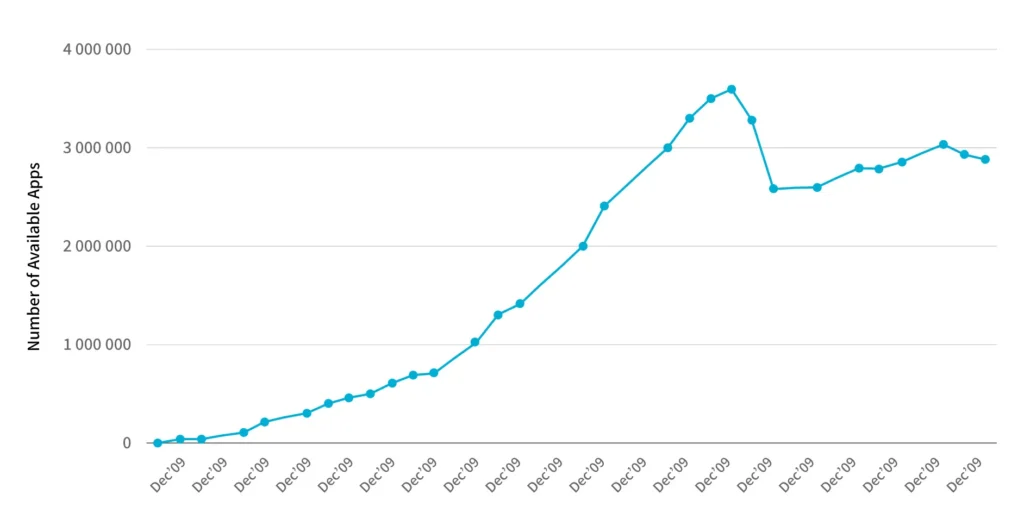
    Globally, there are more than 6.3 billion mobile phone users, according to Statista. According to some reports, the Google Play Store has 2.89 million apps available for download.

    Number of available Apps

    Defining UI design in mobile apps

    The abbreviation UI stands for User Interface. It is how users interact with mobile applications. User interface design for mobile apps is to make interactions between users and the programme as simple, enjoyable, and successful as possible.

    UI in mobile app development A UI in mobile app development refers to any device that allows people to interact with displays, screens, or overlay buttons. The main purpose of mobile app user interface concepts is to deliver the best possible interaction.

    Defining UX design in mobile apps

    The term ‘UX’ refers to the user’s experience. User experience design aims to create a system that provides the best possible experience for users. 

    According to UX principles, customers become loyal customers when they have a positive experience with mobile apps. The user experience (UX) is in charge of a user’s journey via a mobile app or website, which defines the company’s success. UX Design in Mobile Apps

    App for mobile devices UI and UX design are always combined since they are mutually beneficial. To be successful, an app must be the greatest.

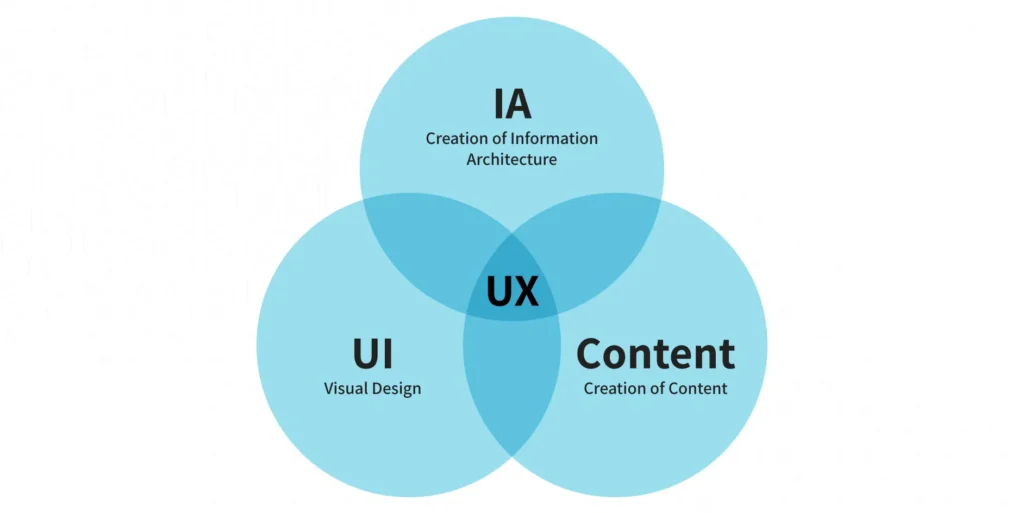
    Difference between UI and UX

    Let’s start with an understanding of what UI and UX mean. The result of a mobile application’s User Interface (UI) and User Experience (UX) is understood as Creative Design. Both of these concepts are sometimes used interchangeably, but it’s a mistake to think of UI and UX in the same way when it comes to design.

    The user interface (UI) determines the application’s appearance and interacts with the user’s requirements to determine their level of satisfaction.

    Difference between UI and UX

    In the UI/UX design services, the UX part works as a systematized approach for increasing consumer happiness by improving the app’s usability. In other terms, UX specifies how an app appears to a user. As a result, both UI/UX are critical for a mobile application to function properly and achieve its goals.

    Deliverables of the UI/UX app design development.

    Any UI/UX designer’s work is divided into several stages. Various deliverables are provided for clients during the UI and UX design process of android and iOS app development.

    These deliverables are developed for multiple purposes, including improved client communication, documentation, and effective presentation of ideas.

    Both UI and UX have their deliverables; let’s look at them to better grasp the significance of mobile app UI/UX design in the development process.

    What are the key UI/UX services?

    1. Mood boards

    Mood boards are used to showcase new ideas in an easy-to-understand format.

    Mood boards

    It aids clients in comprehending the app concept on which the designer would be working. You can save your own or anyone else’s schedule by making a mood board instead of giving long talks with a presentation.

    2. Dynamic prototyping

    Dynamic prototypes are another one of the UI deliverables—prototypes aid in refining the app’s overall functionality and making adjustments as needed.

    UI deliverables—prototype

    A mobile app development company can develop UI according to the clients’ wishes using dynamic prototypes.

    3. Visual designs

    Visual designs will aid in comprehending the effects of design aspects. With visual designs, the effects of elements such as photography, typography, space, colours, layouts, images, and so on may be better understood.

    4. UX deliverables

    User personalities

    Designers must ensure that their clients know what their customers require and anticipate from their products. Creating a buyer persona aids in understanding and explaining customer behaviour to clients. User research is used in the UX process to determine the behavioural pattern.

    Competitive analysis report

    The competitive analysis report is designed to assess your app’s level of competition. All of your efforts will be for nought if your app is in a highly competitive market or if you are not prepared to outperform your competition. A competitive analysis report can reveal the strengths and weaknesses of a competitor’s app.

    Journey of the user, maps, and user flows

    Users’ entire behaviour toward a product is depicted in experience maps. The experience maps show the expectations, time spent, feelings, ideas, and wants, among other things. 

    User journeys, also known as user flows, are the actions performed by a user to interact with a product at various phases. These could be actual or future interactions with a product.

    Interactive prototypes

    Another one of UX’s deliverables is interactive prototyping. In the initial prototyping phase, you will be able to save a lot of time and effort, and it does the job well enough.

    Interactive prototypes

    Prototypes aid in displaying how the final product will function with what clicks and taps leading to the next action. It also aids the designer in effectively communicating their ideas.

    Let’s move on to the relevance of UI/UX design in providing a custom product now that we’ve looked at what UI and UX stand for and what part mobile app UI/UX design plays in the development process.

    Significance of mobile app UI/UX design services

    It becomes critical to understand the importance of UI/UX design in app development. Most developers construct a high-performing app but neglect to focus on the design, which leads to the app’s demise. It isn’t easy to balance an app’s usefulness and relevance in UI/UX design, but it’s necessary.

    One of the most prominent characteristics that might define the success of a mobile application is its ease of use. In terms of appearance, feel, and navigation, providing an unrivalled user experience is simple.

    1. Catch users’ attention

    In the UI/UX design for mobile apps, the designs pique users’ interest and encourage them to interact with the app. Users should, however, be able to grasp the designs and navigation well enough to stay for the long haul.

    2. Form a good impression

    The value of a UI/UX design for a startup or any small business rests in forming the first impression. When consumers first visit your app, they should be immediately hooked and want to come back for more. 

    A good app will have a longer usage period, which may be achieved through the app’s UI/UX design.

    3. Feature in the app store

    The number of users who like a mobile app determines whether it is good. Satisfied consumers’ ratings and reviews will propel your mobile app to the top of search results. 

    Make sure your app’s UI/UX is good to have it highlighted in the Play Store or App Store. Having your app appear in the top rankings of any category will automatically increase its popularity.

    4. Loyal customers

    Appealing apps indeed have more users. Apps with amazing UI/UX, such as Instagram, Facebook, Candy Crush, and others, have attracted millions of users. Users become loyal because of their satisfaction from a positive user experience.

    5. User satisfaction

    Make sure you know your app’s users before you start building the user interface. This will aid you in making changes to your app to suit the demands of your users better. A successful user interface design includes insightful content and straightforward navigation, which leads to client satisfaction.

    Check to see if your app contains all of the necessary features. You should also have a clear structure and an appealing CTA button in the right place.

    6. Save cost and time

    When you start with a solid understanding of mobile app best UI/UX practices, you can rest assured that app maintenance and updates will be minimal.

    And, because those two issues will be addressed, the obstacles you may have following the app’s introduction will be minimal.

    7. Brand building

    Investing in a successful Ul/UX design increases customer happiness, resulting in happy consumers. Individuals like to work for companies that make them happy.

    They’ll be willing to accept features that can be enhanced and, as a result, invest resources in improving your app.

    As a result, your company’s credibility grows, and customers form positive ties with your company and brand. The value of your company and your brand name will increase due to this.

    8. Enhanced traffic

    Users are more prone to stick around if the UI/UX is nice. Nothing can stop them from researching the predetermined target and converting users into invaluable clients if your website or mobile app is well-built and has an outstanding client experience.

    As a result, it is your obligation and that of the UI/UX developers to ensure that your site/application has the best UI/UX possible.

    It’s a widespread misconception that you don’t require any additional guidance if you’ve mastered the UI/UX development process. However, considering how the impact of UI/UX design may be long-lasting, there’s little harm in going over some sure-fire tips.

    9. It makes your business unique

    Suppose you aspire to make your business unique and different from others. You will have to understand your customers and their needs. You may influence new users and increase sales conversions with an excellent UI/UX design.

    Planning mobile development?

    Ready to elevate your app development projects? Partner with us for seamless app development solutions.


    Book your free consultation

    Image CTA

    How mobile application design and development services can ensure successful UI/UX?

    You will find many companies that offer mobile application design & development services in your town. That’s why it becomes critical for you to choose the best one.

    1. Leveraging UI elements

    Ensure that all elements, such as buttons, icons, colours, contrast, and symbols, are consistent. The elements are the one that users frequently interact with.

    UI elements

    It will make it easier for users to become accustomed to the elements, and they won’t need any additional instructions to continue using the app. It will boost consumer’s confidence and provide security when using your mobile app, which they can also share with others.

    2. Try to keep it engaging

    Apart from the app’s look, you must concentrate on moving from one window to the next. Try to develop an app that is more engaging for the users.

    3. Set uniformity

    Try to keep your app’s layout consistent across all windows. 

    Set uniformity

    The skilled developers recommend that the consistent design makes it simple for the audience to carry out their actions.

    4. Faster and smoother

    When working on your app’s UI, make it a goal to ensure that it doesn’t take too long to load. It may result in users losing interest in your software right from the start. It is preferable to optimise your mobile application so that it loads in a fraction of a second so that users cannot switch to another app.

    If your application takes longer than expected to load for any reason, it’s a good idea to let users know. This will inform your users of the delay, and they will wait for the programme to load.

    5. The simpler, the better

    A user will only download a mobile app if it promises to give top-notch services with minimal effort. As a result, it becomes our primary priority to keep this in mind while creating a mobile app, which can be accomplished by decreasing the number of steps to be performed throughout the download process.

    6. Build user-friendly designs

    In the age of touch screens, it’s your responsibility to ensure that all icons and buttons are the right sizes. 

    7. Hire the right UI/UX designers

    Working with experts is highly suggested if you focus on the mobile app user interface design and experience. To ensure that your app’s UI/UX designs are on point, you can outsource app development to a professional app development business. All end-to-end user interactions should be understood by the UI/UX designers and incorporated into the app.

    8. Consider platform-based designs

    The UI design of iOS app development differs significantly from that of Android app development. Similarly, the iOS app UX design differs from the Android app UX design because both platforms are designed at the device level. 

    What matters is that you comprehend both Material Design and Human Interface Design and the aspects that distinguish them.

    The minimal approach in the beginning of UI/UX for mobile app development

    Creating UI/UX development processes frequently concentrates on too many components at once, resulting in a poor user experience. If there are many things ongoing on the screen, the user will be unable to focus on the app’s content.

    Another approach to quickly lose users is to overcrowd the screen with stuff. You must have a thorough and deep understanding of your target market.

    After all is said and done, the only thing that can prevent the bad effects of UI/UX design is a thorough understanding of your users.

    You can only give a memorable experience to your user base and the rest of the world if you know who you’re producing the product for. A well-planned product discovery workshop is one approach to accomplish this.

    The only thing that you are required to do now is work with a trustworthy and professional app design business. You can increase your mobile UI/UX design services with the support of a good app design and development business.

    How effective can UI/UX design make your mobile app successful?

    Mobile consumers prefer app designs that are both exciting and straightforward. You must create a user-friendly interface and easy navigation for them.  

    The development of a well-designed app determines the success of a company. Most users prefer visually appealing and user-friendly software with amazing features and functionality.

    user-friendly software

    As a result, creating a superb user interface will provide your users with a realistic experience while using your software. 

    Furthermore, it continuously offers updated information. More traffic will be generated if more individuals utilize your app daily. This will boost sales conversions and strengthen your brand’s identification.

    Conclusion

    UI and UX designs help establish a brand and improve its online visibility. All the netizens expect a high class user experience in today’s world when it comes to using the mobile app. As a result, they look for apps with a user-friendly and engaging layout.

    A flawless UI/UX design for mobile application will enhance your company’s visual identity. As a result, it will keep expanding. Use the best UI/UX design techniques and follow the current mobile app UI/UX design trends if you aspire to stand out in the digital world. 

    Find the best mobile app development company that can deliver the best mobile app for your business as per your requirements.

  • Top Mobile App Development Company in Canada

    Canada recorded a significant boost in mobile usage and custom app solutions. Approximately 33 million more users than the previous year. This boom in mobile usage was observed right from the beginning of January. It indicates a solid start to the year for the mobile app development company in Canada.Canada is widely known as an IT hub. Its strong tech industry continues to attract both domestic and international companies.

    The increasing number of mobile users has created a growing demand for innovative app development solutions for startups. This presents several opportunities for the mobile app development company to expand its reach and capitalize on this trend.

    To boost your marketing business’s reach and overcome competition, invest in mobile app deployment in Canada. Also, listen to the needs of the growing number of mobile users.But here is a question: How can you guarantee that your mobile app stands out from the competition?

    There are thousands of mobile app development companies in Canada. Also, the mobile app market is constantly evolving, and new apps are being released every day.

    Every mobile software development company provides innovative app development solutions. They use their expertise and knowledge in the field.So, for your solution, here we list down the top mobile app companies in Canada. mobile app development company

    Zennaxx

    Zennaxx is at the top of the list of the most successful mobile software development companies in Canada in the past 10 years, with a strong background in delivering high-quality mobile applications and solutions in Canada. 10+ years of experience in the technological field provides you with assured and top-quality support and management.Zennaxx has a 50+ members team of skilled developers and designers. Your projects are maintained under their experienced manager for better results.

    They consistently stay ahead of the latest industry trends and technologies. Zennaxx software services provide not only mobile app development services but also web development, software development, and IT-related solutions.

    Their expertise extends to web development, UI/UX design, and software testing. They prioritize client satisfaction and strive to deliver innovative solutions that meet their specific business needs.

    Zennaxx is most known for being the best mobile app development company in Canada, with 92% satisfied client reviews all over the world and completed 700+ high revenue generating successful projects.

    Services offered: Android & iOS app development, Cross-platform app development, Web designing, UI/UX design

    Expertise and technologies used: PHP, Node JS, java, HTML5, Angular, ReactPortfolio and client references: Mitsubishi, Hitachi, Nike

    Mindsea

    Mindsea Software Services is another reputable company in the industry. It offers a wide range of mobile app development services in Canada.

    They specialize in creating user-friendly and visually appealing applications for both the Android and iOS platforms. Mindsea ensures that its clients receive top-notch solutions that align with their business goals. They do this through their expertise in UI/UX design and software testing.

    Mindsea has an experienced team of developers. They provide high-quality code and efficient project management. As a result, Mindsea delivers projects on time and within budget.With the mobile app solution, Mindsea has completed health-related projects in history. Their commitment to innovation and customer satisfaction has earned them a reputation as one of the leading mobile app development companies in Canada.Services offered: UX designs, App development and technology, Digital Health SolutionExpertise and technologies used: JavaScript, React.JS, Laravel, React Native, HTML5Portfolio and client references: University Health Network, HUSO On the Go, 99 Walks

    Fullestop

    Fullestop is a leading web design and app development company in Canada. IT mainly works on digital product development projects. With their expertise in digital production, we chose this company on the list of the best mobile app development companies in Canada.Their team of skilled professionals has a proven track record. They deliver high-quality websites and mobile applications that meet the unique needs of their clients.Fullestop’s commitment to innovation and customer satisfaction sets them apart from other companies in the industry.

    Their experienced team not only provides a service but also wins many awards. They receive recognition for their best performance, creativity, and expertise. They also provide various services related to development and web solutions.

    Fullestop stays up-to-date with the latest technology. This dedication ensures their clients get cutting-edge solutions. It gives them a competitive edge in the market.Services offered: e-commerce development, software development, AI developmentExpertise and technologies used: WordPress, JavaScript, Python, SQLPortfolio and client references: Walkswagon, Adidas, and Scoda

    Techware Hut

    Techware Hut is a premier digital agency. It has been providing services worldwide for over 22 years and have extensive experience in mobile app development, custom web development, and application development.

    It also has experience in staff augmentation, SEO, SMO marketing, and cloud application development. In the journey of 22 years, the company has completed over 7,500 projects in the development industry.

    My broad experience in the development industry ensures the best practices and top-notch skills in all kinds of technology to complete projects. Full stop has a team of highly skilled professionals.

    The team has earned a reputation for delivering innovative and cutting-edge solutions to clients across various industries.

    They stay updated with the latest technological advancements. This commitment allows them to exceed client expectations and deliver exceptional results.

    Services offered: mobile application development, web development, and IT consultingExpertise and technologies used: B2B apps, AngularJS, WordPressPortfolio and client references: Fair and Handsome, Scoda, Adidas, Sony

    Bytes Technolabs

    Bite Technolabs provides mobile app development services for all kinds of small and large industries and entrepreneurs. They also offer Google app engine development services. During this development, Bite Technolabs provides UI/UX design.

    They also offer web app development, eCommerce development, CMS development, emerging technologies, quality assurance, software testing, infrastructure, and DevOps.

    Company developers are skilled in creating efficient and scalable custom mobile app solutions. They use the Golang and Lavarel frameworks and have extensive experience in building robust applications.

    They cover all the unique requirements of each client. The company has a team of over 150 developers. With this skilled team, the company has around 425 global clients. They provide top-notch mobile app development solutions in Canada and around the globe.

    Services offered: Mobile App Development, Shopify, Web Development

    Expertise and technologies used: Python Django, .Net, Drupal, Golang

    Portfolio and client references: Alliance consumer group, Ragnar, Healthy Planet

    Master Of Code Global

    Master of Code Global is known for Android mobile app development. They are a mobile app development company with the best practices. They also make conversational chat and voice solutions enabled by AI. 

    It started in 2004 and has since grown to become a leading global software development company with 250+ masters in international. They are committed to delivering innovative and high-quality software solutions to clients worldwide.

    Master of Code Global can handle large-scale projects effectively because of its large team. Their team of experts guarantees that each project is delivered on time.

    The projects also meet the highest standards of quality. Additionally, their dedication to staying at the forefront of technology trends allows them to provide cutting-edge solutions to their clients.

    Services offered: eCommerce Development, Mobile App Development, AI Development

    Expertise and technologies used: Android, Cross-Platform, WordPress

    Portfolio and client references: Luxury Escape, Aveda, eBags, Burberry

    Multiverse Software

    Multiverse Software is an award-winning mobile app development company. With mobile app development, they also contribute to the growth of your business and applications. Multiverse software provides mobile app development services.

    They also offer website development, branding, marketing, and all kinds of IT services. They provide start-to-end support in all types of services.

    The Multiverse software team achieved the 2017 GMASA Awards and Google’s Made for Billions. They got these awards for their hard work and good development practices.

    Their expertise in mobile app development has not only earned them recognition and awards. It has also helped numerous businesses thrive in the digital market. 

    Multiverse Software offers a comprehensive range of services. This ensures that clients receive holistic support for all their IT needs. They are a trusted partner for businesses who are seeking mobile app development

    Services offered: Mobile app development, It services, Graphic designs 

    Expertise and technologies used: Laravel, Flutter, React Native

    Portfolio and client references: Huawei, Gujarat Advocates, Healstation Foundation

    Build Me App Inc

    Build Me App Inc. is a 22-year-old mobile app development company in Canada. They specialize in creating innovative and user-friendly mobile applications for various industries.

    With a team of experienced developers and designers, Build Me App Inc. has successfully delivered numerous successful projects to satisfied clients worldwide.

    With the use of an AI-based estimator, this mobile app consultancy service provides a business estimate for team timing and the cost of developing a whole business.

    Buid Me App Inc. can provide you with superior development with its massive team of 500+ developers and support team to handle your projects easily.

    This team has over 200 products on the market, generating good revenue for their business. Build Me App Inc. They stay up-to-date with the latest technological advancements and industry trends. This allows them to deliver cutting-edge solutions that drive business growth and success.

    Services offered: Mobile App Development, Web Development

    Expertise and technologies used: JavaScript, Python, Django, Flutter

    Portfolio and client references: Colibri, gSwop, Swop Market

    Openxcell

    Openxcell is a CMMI Level 3 and ISO 9001:2008-certified company. It successfully developed over 3000+ mobile applications and customized 2000+ software. Companies are ready to sign a non-disclosure agreement for project confidentiality.

    This is because they have good expertise in mobile app development. Openxcell’s skilled developers and designers ensure the highest level of security and privacy for their client’s projects.

    Openxcell covers all development from simple business mobile app development to complex enterprise-level eCommerce solutions. The Openxcell team of certified SCRUM developers supports your development.

    They also provide top-notch technology solutions for your business. Openxcell has extensive experience in mobile app development. They are well-practiced in handling projects of any complexity.

    Services offered: Software Development, Product Engineering, AI & ML Machine Learning

    Expertise and technologies used: Next.js, Python, Android

    Portfolio and client references: Byju’s, Hubble, Pedigree

    Designli

    In the list of the top ten mobile app development companies in Canada, we finish this blog by adding Designli Mobile Development Company to this list.

    Design specializes in developing new technology for mobile applications. This mobile app development company provides new software concepts to the market.

    Designli is also an Agile Software Development Agency, which means the success rate of development increases by 150% with this method. This methodology helps you generate 60% more revenue and profit in your business. 

    The 70% of Designli teams are experts in agile methodology. They have a proven track record of delivering high-quality mobile applications within tight deadlines. Designli ensures efficient collaboration.

    Their expertise in agile methodology enables quick adaptation to changes in project requirements. This company’s dedication to innovation and customer satisfaction sets it apart from other mobile app development companies in Canada. 

    Services offered: Mobile App Development, Software Development, IoT

    Expertise and technologies used: Node.js, Android, Flutter

    Portfolio and client reference: Thingealogy, Secur. Space, Paidback

    Planning mobile development?

    Ready to elevate your app development projects? Partner with us for seamless app development solutions.


    Book your free consultation

    Image CTA

    Conclusion

    The list of the top 10 mobile app development companies in Canada is based on their previous projects and successful output. These development companies help you to build the best mobile app with a high-quality customer experience.

    They have a team of skilled professionals who specialize in variousaspects of app development, such as design, coding, and testing.

    These companies also stay updated with the latest trends and technologies in the mobile app industry to ensure that your app is innovative and competitive in the market. 

  • A Complete Guide on Healthcare App Development

    After COVID-19, the healthcare sector has exploded quickly. According to Statista, global sales in healthcare are expected to reach $57.86 billion by 2023 and $85.95 billion by 2027.Medical groups are using healthcare mobile apps more frequently to improve services, which is contributing to this growth. COVID-19 created opportunities for healthcare apps, prompting businesses to consider questions such as workforce health and safety, expense management, and social responsibility.
    These apps use AI insights and real-time data analytics to improve patient care and, in some cases, transform medicine.

    The global digital health market is expected to grow to nearly $190 billion by 2025. If you are thinking about developing a healthcare mobile app, this resource will inform you about everything you need to know whencreating healthcare apps.

    Build a Healthcare App

    What is a Healthcare App?

    Developing a healthcare app means making a mobile app that helps people manage their health worries using their phones or tablets. This could be things like tracking medical appointments, accessing electronic health records, dealing with insurance claims, and many more.

    Software consulting in healthcare develops medical applications in every field. Medical fields are also starting to do many tasks online for patients and doctors. 

    Benefits of developing a healthcare app

    For doctors: These apps help doctors keep track of patients, schedule appointments, and manage their staff.

    For Patients: People can use these apps to book appointments, talk to their doctors online, or get health advice.

    Lots of firms are developing healthcare apps. Here are some figures about them:

    • There are about 45,478 healthcare apps available on Apple’s App Store.
    • The Play Store has around 43,285 healthcare apps.
    • In 2022, the global mHealth industry made $ 56.26 billion and is expected to grow to $ 861.40 billion by 2030. exhibiting a CAGR of 40.2% during 2023–2030.
    • A survey by Accenture found that 75% of patients understand why health apps are essential.
    • The telemedicine software solutions are predicted to grow to $17.14 billion by 2026.

    Today, there are many different kinds of healthcare apps for various needs and functions.

    Professional Healthcare Apps

    Professional healthcare apps are specifically designed to connect doctors to the communication and treatment processes between patients and healthcare providers.

    These apps serve as mediators for facilitating interactions and managing medical information. Here are different types of professional healthcare apps:

    • 1. Doctor appointment apps:
    • 2. Electronic medical/health records apps:
    • 3. Medical reference apps:
    • 4. Database apps:
    • 5. Health tracking apps:
    • 6. Networking apps (for doctors):
    • 7. Telemedicine apps:

    Healthcare Apps for Patients

    These apps typically do not require direct support from doctors, but they provide valuable information and features to patients. Here are different types of healthcare apps for patients, each with its own set of features:

    • 1. Medical education apps
    • 2. Reminder apps
    • 3. Healthy lifestyle apps
    • 4. Dieting apps
    • 5. Diagnosis apps for preventive purposes
    • 6. Fitness apps

    You have a ton of options for your startup idea with this broad spectrum of possibilities.

    Different Types-of-Medical Apps inner image

    Different Types of Medical Apps

    We are now going to discuss the different types of apps developed by software consulting in healthcare. The utilization of applications and their priorities will vary depending on the department and personnel human uses.

    Here, we discuss a few different types of medical applications.

    1. Health Apps for Patients

    Patients should manage their routing and stay updated by using these apps. Patient’s health apps include keeping track of their regular checkups, scheduling appointments, or providing information about medical conditions and treatments.

    2. Health Apps for Providers

    Doctors and nurses use this health application to manage the routing schedule and time. They could help with things like managing patient records, accessing medical literature, or communicating with colleagues.

    3. Health Apps for Medical Administration Staff

    Workers in healthcare settings who perform administrative or office-related tasks can use these apps. They might help with tasks such as scheduling appointments, managing billing and insurance, or organizing patient information and records.

    4. Telehealth Apps

    In between busy schedules, telehealth apps provide online help to participants. Patients don’t need to physically visit a clinic when using telehealth apps to communicate with their healthcare providers via video calls or messages.

    5. Medical Networking Apps

    Medical apps connect healthcare professionals for collaboration, learning, and sharing information. it can be used to discuss cases, ask questions, or connect with colleagues in the field. This apps are used to build an extensive professional network.

    6. Medical prescription apps

    These apps help doctors and other healthcare providers manage prescriptions for their patients. They might include features like electronic prescribing, medication reminders, or drug interaction checks.

    7. Medical Record Apps

    These apps store and manage patients’ medical records digitally. This kind of application makes it possible for healthcare providers to quickly and easily access important information like previous treatments, test results, and allergies.

    Healthcare Apps for Patients and General Users

    8. Healthcare Apps for Patients and General Users

    General healthcare apps help with routing and provide general health information to their users. Helped manage physical and mental health and offered helpful data to users to take care of their regular health needs.

    Some apps also offer features such as medication reminders, symptom tracking, and virtual consultations with healthcare professionals.

    9. Mental health apps

    Mental health applications are focused on mental well-being. This app provides tools and techniques for managing stress, anxiety, depression, or other mental health concerns. Users can access resources like guided meditation, therapy sessions, or mood tracking to improve their mental wellness.

    10. Health monitoring apps

    These apps help users track their health metrics and progress over time. They may include features for monitoring health signs like blood pressure, heart rate, or glucose levels.

    Users can use these apps to keep track of their health and make informed decisions about their lifestyle and habits.

    11. Medical Education Apps

    Medical education apps are designed to make users aware of various medical topics, conditions, and treatments. They provide reliable information and resources to help users understand their health better.

    Users can access articles, videos, or interactive tools to learn about medical issues and make informed decisions about their health care.

    12. Health and Lifestyle Apps

    The Lifestyle app provides lifestyle-related information and encourages users to adopt healthy lifestyles.

    Built-in features like exercise routines, nutrition plans, and wellness challenges to help users improve their overall health. Users can keep track of their progress, set goals, and receive personalized recommendations for leading a healthier lifestyle.

    Software consulting in healthcare provides every type of solution related to medical industries.

    You can solve every development problem by contacting the right medical software consulting company for app development. You can directly share your project idea and get an estimate by visiting Zennaxx software consultancy.

    Planning mobile development?

    Ready to elevate your app development projects? Partner with us for seamless app development solutions.


    Book your free consultation

    Image CTA

    Why is Healthcare App Development Essential for Businesses?

    According to the reports, 6.5 billion smartphones are active in the world, and Current numbers show that the industry will experience a 14% growth year, so you can imagine how quickly this industry is growing.

    So, bringing up with software consulting in healthcare app building support, we provide you the step-by-step healthcare app building guide for the best application development in an easy, professional way to cover all the areas.

    6 Steps to Build a Healthcare App

    Healthcare IT consulting services have some differences from other app development. You have to understand many specific needs and be concerned about some differences. If you want to know about a clear development road map, see this guide on development to give you clear direction and avoid making mistakes.

    Step 1 – Do Market Analysis

    You have to do a deep market analysis before building a healthcare app, and you have to include user pain points and needs. Fins, the competitor’s strong and weak sides, help you focus on the healthcare app’s development goals. Do research on the apps on the market, understand their simple UI/UX designs, and try to make them simpler than competitor’s apps.

    Step 2 – Study Your Audience

    Do complete user research during this process. Good market research helps you cover every user’s points in your healthcare application. You have to handle all kinds of sensitive issues directly through the app. It can be challenging to understand users’ problems while maintaining social rules when conducting focus groups, surveys, or interviews.

    Know how people want to use your application by deep analysis with healthcare IT consulting services. What kind of hospital process can users wish to permeate the healthcare app? Know more about acute needs and their requirements before making a final list of your application. This study helps implement every helpful feature in your healthcare app.

    Step 3 – Choose App Type

    Now, it’s time to choose the application type. What kind of app will work more smoothly and help users? Read your functionality list and try to understand how these features get into your healthcare application. With a clear vision, you can create clarity between your needs and the development process. This choice is based on the problem in your application, your target audience, and the intended use case. 

    Step 4 – Create Design

    The design and UI/UX parts are the main reasons behind your application’s goal, and the health app layout should be consistent and intuitive. You have to focus on your application layout and navigation process. With a simple design, users like to use most of your application, and for a better user experience, make it work smoothly on every device. We also recommend that you minimize the cognitive load of your application for a better user experience.

    Step 5 – Make it HIPAA-compliant

    We cannot adequately point out how sensitive the healthcare topic is, and developing healthcare applications takes work. If you want to create a healthcare app, you must follow specific regulations.

    The USA region will require your app to comply with all HIPAA regulations. HIPAA was created to protect personal healthcare information for both patients and healthcare providers. If you want to understand this in more detail, read this paragraph on HIPAA compliance in healthcare app development.

    Specific user roles have access to the health data of other users. Only the treating doctor has access to their patient’s profile, which includes analysis, progress, diagnosis, and other information.

    Developers must use trustworthy encryption protocols to protect all personal health information. The IT team must keep information in multiple copies on different servers in case of a crash or error and respond to any alerts as soon as possible.

    Every healthcare mobile app development service must be HIPAA compliant. When working on one of the projects, you must use secure chat, which is HIPAA compliant.

    Please keep in mind that this is a partial list of what to include in your app complaint. We primarily concentrated on technological concerns, but there are also administrative requirements, such as assigning specific responsibilities and developing policies.

    Check the official guidelines to make sure you’re not breaching any regulations. You can also work with companies that provide HIPAA audits to assist you in becoming or remaining compliant.

    build mvp

    Step 6 – Build MVP

    Now you have an idea about choosing the health application types and security guidelines. Before the launch of the actual product, you can buy the MVP because you will get an idea of market demand and user preferences. When developing a healthcare app MVP, please keep the following guidelines in mind: build it quickly and make it viable.

    Before starting to build an MVP, make sure you have covered every feature users have needed and are solving every single problem.

    MVP gives you a competitive advantage because you can enter the market faster and collect feedback from real users than if you built a full-fledged product right away.

    Solving any difficulties and making minor improvements as per user feedback will make your application strong for the market at every point. 

    It saves your product’s market value while also informing customers about your new upcoming product.

    Zennaxx Software Consulting provides a valuable solution for your project. Share brief details about your idea and get support to make it accurate by reaching out to us now!

    develop an educational app.

    Healthcare App MVP: Features Checklist

    Here is a concise checklist of necessary features for a healthcare app by using every software consulting in healthcare development: Minimum Viable Product (MVP):

    User Authentication: Secure login and registration processes for patients, doctors, and other healthcare professionals.

    Profile Management: Application Users can create and manage their own profiles, like data of personal information, medical histories, and preferences.

    Appointment Scheduling: Functionality to schedule, reschedule, or cancel appointments with healthcare providers.

    Telemedicine/Video Consultations: Capability for remote consultations between patients and healthcare professionals via video calls.

    Electronic Health Records (EHR): Storage and access to digital health records, including diagnoses, medications, lab results, and treatment plans.

    Prescription Management: A feature for doctors to prescribe medications electronically and for patients to view and refill prescriptions.

    Health Monitoring: Tools for users to track vital signs, symptoms, medications, and other health-related data.

    Notifications and Reminders: Automated alerts for appointments, medication reminders, and essential health updates.

    Secure Messaging: Secure messaging functionality for communication between patients and healthcare providers.

    Integration with Wearable Devices: Compatibility with wearable devices for seamless data transfer and monitoring.

    Data Privacy and Security: Implementation of robust security measures to protect patient data in accordance with regulations such as HIPAA or GDPR.

    Feedback and Rating System: A mechanism for users to provide feedback and rate their experiences with healthcare IT consulting services.

    This 12-point checklist covers the core features necessary to create a functional healthcare app MVP. Additional features may be added in subsequent iterations based on specific requirements and the target audience.

    Custom Healthcare App Development Cost and Time

    The total cost of developing a wellness and health mobile application is defined by the number of features and capabilities.

    With the growth of new technologies and systems, we have to take advantage of the best software consulting in healthcare to develop the best healthcare development with low-cost and quality features.

    It depends on some essential roles and management; let us also take a look at the team requirements. To create a healthcare mobile app, you will need the team of:

    Require Team

    • Frontend Designer
    • Back End Developer
    • DevOps
    • Business Analyst
    • UI/UX Designer
    • Team Project Manager
    • Quality Assurance

    Our healthcare mobile apps for patients provide services that are specifically curated to help you get the best results from the product.

    The cost estimate will consequently be predicated on the inclusion of features from a single, viable product.

    Let’s get an idea about the development time of some essential application parts and solutions.

    Cost Of Development

    We can calculate the cost based on the number of hours required to develop the health app. To create a mobile healthcare app, you can use one of three types of development services.

    • In-house team
    • Freelancers
    • Outsource

    Among one of these options, an in-house team will produce a high-quality product, which may be costly.

    When you’re just getting started, hiring and maintaining an in-house team is expensive. It may charge $100 to $200 per hour.

    The second option is to employ freelancers from all around the world. That’s another great way to save money.

    However, quality is not guaranteed when freelancers design your application. So, what is the ideal strategy for creating a medical application?

    It is possible to obtain the most competitive rates by hiring an outsourcing agency. When comparing service prices and developing a healthcare mobile app, we found that outsourcing has the lowest hourly rates and the highest quality development.

    For application development in the healthcare industry, the going rate is about $40 per hour.

    All The total costs of healthcare application development are in the table below.

    This table provides you with the lowest estimated cost for buying a simple healthcare application. Contact us anytime to discuss your queries and problems. We help create healthcare applications from scratch with our experienced team of developers.

    Challenges in Medical App Development

    Medical app development is a project that includes our security plus government regulations and rules. Healthcare applications are not like developing games; we have to develop health-related software, so it is essential to care about solving every development challenge. Also, care about some points as per below:

    • Regulatory Compliance
    • Smooth Integration
    • Clinical Validation
    • Scalability
    • Compatibility
    • Updates & Maintenance

    Several challenges come with the development of medical health applications. Some are that you have to be aware of, but software consulting in healthcare knows about every little rule and regulation and solves challenges.

    Lack of Detailed Focus in One Domain

    Medical software consulting focuses on medical areas or healthcare needs when making a medical app. If this wasn’t the case, the app might not be able to meet the particular needs of a specific medical profession or group of patients.

    Non-Compliance with the Law

    Medical apps have to follow strict rules and laws to protect patients, keep data private, and be correct. Not following these legal requirements can lead to harsh penalties, such as fines and legal action.

    Lack of Security

    Medical apps handle sensitive patient information, such as medical history and treatment records. If the security measures aren’t strong enough, people who shouldn’t be able to can get this info and steal your identity or breach your privacy.

    Presence of Multiple Channels and Devices

    To reach a wide connection and meet users’ needs, medical software needs to work smoothly on a number of different devices and platforms. Building and maintaining compatibility across various channels, on the other hand, can be challenging and takes more time and money.

    You have to be aware of every tiny change and challenge users have to face. Try to solve it covered by new features and technology, which gives you a chance to grow more in the market.

    Essence

    Software consulting in healthcare means helping healthcare organizations use technology by giving them skilled advice and support.

    One of the main goals of software advising is to help organizations choose the best software solutions that are best for them. Software consultants in healthcare work closely with healthcare workers to learn about their processes, problems, and goals.

    The population health management software experts are minimal and understand the health and the medical field deeply.

    Healthcare technology solutions carefully look over current systems and procedures to find ways to make them better and then suggest software solutions that fit the organization’s needs and budget.

    So, if you are thinking about developing a healthcare app, consult the software results for better guidance and support.

    FAQs For Healthcare App Development


    • HOW MUCH DOES IT COST TO DEVELOP A HEALTHCARE APP?

    • According to an internet study report, A simple healthcare app might cost between $35,000 and $75,000, but more complicated apps might cost more than $100,000. The primary cost of developing a healthcare app depends on the features, how difficult they are, the location, and the development team’s expertise.

    • HOW DO YOU MAKE AN EFFECTIVE MEDICAL MOBILE APP?

    • First of all, focus on finding out your user’s needs, doing deep market research, designing an easy-to-use interface, following HIPAA compliance for data security, adding features like appointment scheduling and tele-medicine, and regularly updating and maintaining the app to make sure it works at its best.

    • HOW LONG DOES IT TAKE TO DEVELOP A MEDICAL APP?

    • Application building time depends on the features and complexity of the medical application. A fully working healthcare app can take anywhere from six months to more than a year to make. Rapid prototyping and MVP development can speed up the launch process.

    • DO ALL THE HEALTHCARE APPS NEED TO BE HIPAA COMPLIANT?

    • Yes, a healthcare app that works with protected health information (PHI) must follow the rules set by the Health Insurance Portability and Accountability Act (HIPAA) to protect patient data’s privacy and safety. If you don’t follow the rules, you could face legal consequences and fines.

    • IF YOU COULD GIVE ME ONE PIECE OF ADVICE TO HELP ME CREATE AN EXCELLENT HEALTHCARE APP, WHAT WOULD IT BE?

    • Put the safety of your users and their info ahead of everything else. Please focus on the user when making the app, and make sure it’s simple and easy to use. Also, HIPAA rules must be strictly followed to protect patients’ privacy and trust.

    • HOW CAN WE USE BLOCKCHAIN TECHNOLOGY IN MEDICAL SOFTWARE?

    • Blockchain technology can improve medical software by keeping patient records safe and open, promoting data integrity, letting healthcare providers share medical data safely, speeding up the claims process, and making it easier to track drugs and manage the supply chain.

    • HOW CAN I MAKE SURE MY PATIENT APPLICATION REMAINS COMPETITIVE?

    • To stay competitive, make sure you regularly add new features and improve existing ones based on what users say and how technology changes. Keep up with changes and trends in your business, work on making the user experience better, and spend money on marketing and advertising to stay visible and bring in new users.

    Read Also: 

  • How to Make an App like Uber: Process, Cost & Tips

    If you are reading this blog post, we know you are coming here with some questions and ideas. Your mind is thinking of creating something new in this digital world. You have a clear vision and plan to make something new to accelerate this digital era. 

    Upon investigating the on-demand economy, one is presented with a picture of expansion in which companies utilizing this model have achieved great success and have gradually gained investor favour. 

    Today, many distinct categories comprise an on-demand ecosystem: food delivery, ride booking, at-home services, and even job on-demand.

    When you look at the on-demand taxi booking app market, you’ll notice that apps like Uber and Lyft dominate a large portion. However, when it comes to Eastern nations such as the Middle East, Careem is the clear market leader. 

    Creating an app like Uber typically ranges from $70,000 to $100,000 for just one iOS or Android platform. If you want to add more platforms or features, the development cost increases accordingly. In this blog, we cover everything from the start to discuss each factor of the cost of developing an app like Uber.

    How Much Does It Cost to Build an App Like Uber

    How Does Uber App Work?

    The main thing that affects how much it costs to make an app like Uber is what it can do. Even though it seems like just one app to users, it has many different parts.

    Let’s look at what the app can do, for instance.

    Depending on where you are, people using Uber can choose from different kinds of rides:

    • UberX: This is the regular option for booking a ride for up to 4 people.
    • UberXL: This is for bigger groups, up to 6 passengers.
    • Uber Black: This is a fancy taxi service.
    • Uber Black SUV: These are premium rides for up to 5 passengers.
    • Car seats: These are cars with seats for kids.
    • WAS: These are rides in vehicles that are easy to get into for people in wheelchairs.

    But Uber isn’t just about rides. It’s significantly grown and now includes other services like Uber Eats and Uber Rent.

    So, how much it costs to make an app like Uber depends on all these different things, and we’ll look at all the critical factors.

    The Number of Apps Needed

    Did you know that creating an app like Uber actually involves making not just one, but three different apps? 

    Here’s what we’re talking about:

    1. Driver app: This app is specifically for drivers. They use it to accept trips, see trip details, get paid, and keep track of their earnings.

    2. Passenger app: This one is for people looking for rides. Passengers use it to book drivers, find nearby drivers, pay for their rides, and rate their experience.

    3. Admin panel: This is like the control centre for your app. It lets you manage everything, from users to payments to reports and analytics.

    And remember, all these apps rely on a backend system to work properly. So, when you’re thinking about the cost of making an app like Uber, don’t forget to include the backend development too.

    Want to Explore All Aspects of Uber App Development?

    Uber app development includes different aspects. It includes technical aspects, business aspects, and marketing aspects. Each has various cost factors and requires a unique approach to calculating its value and determining the cost of Uber app development. 

    So, these aspects clear your mind to choose the correct option in development.

    1. Type of the vendor

    When it comes to developing an app like Uber, you’ll need to choose the right type of vendor to help you. Here are the three options you can choose from:

    Freelancers:

    You can hire individual freelancers to work on your app. While this might seem cost-effective initially, there are challenges. You may have little control over the development process, and quality’s not guaranteed.

    Plus, if issues arise, you might have to start over. Freelancer costs vary widely, but you might expect to pay anywhere from $20 to $150 per hour, depending on their expertise and location.

    In-house team: 

    Another option is hiring developers to work directly for your company. However, this comes with its own set of challenges. You’ll need to pay salaries regardless of whether there’s work for them, and there are additional costs like office space and dealing with HR matters. This might work well for larger companies but could be risky for startups with tight budgets and deadlines.

    Outsourcing to a app development company:

    This can often be the best choice. By outsourcing, you hand off the development work to a third-party company. They handle everything, including ensuring quality and meeting deadlines. Costs for outsourcing can range from $50,000 to $140,000 for one platform (iOS or Android), depending on the complexity of the app and the company you choose to work with.

    This option can be desirable to avoid the hassles and bureaucratic issues of managing development in-house.

    Outsourcing to a app development

    How to find the best software development vendor?

    Choosing an Uber app software development vendor not only affects your app development cost but also impacts the quality and success of your project.

    Researching vendors’ portfolios, client reviews, and communication styles can help you find the best fit for your needs and budget. Consider scheduling consultations with potential vendors to understand their expertise and software development approach better.

    Schedule 1:1 consultations with Zennaxx

    2. Number of supported platforms

    Choose the right operating system between Android and iOS. Everyone chooses both at the start of development, but then it becomes somewhat costly, and in the end, it increases more than the budget sometimes. We prefer the option to try MVP testing to find the right platform; this helps you so much with marketing and upgrading your app like Uber and is more helpful than it.

    Now, why not develop for both platforms? That’s an option if your users are evenly split between Android and iOS and if you’re ready to invest heavily in development without testing the waters first with a minimum viable product (MVP).

    3. Uber Application Features

    The app uses GPS technology to detect the user’s location, allowing for precise pick-up and drop-off points and a hassle-free experience. The Uber application offers diverse ride options, including UberX, UberXL, Uber Black, UberPool, and UberWAV, catering to various needs and preferences.

    You need to concentrate on the safety features for user and driver satisfaction. Must focus on features like real-time tracking, requiring users to share their trip details with trusted contacts, and driver background checks to verify their credentials.

    A critical factor in high security is the availability of multiple payment options in select regions, including credit and debit cards, digital wallets, and cash.

    Fare estimates and transparent pricing ensure that users know the cost before confirming their ride. Extra valuable features like the Uber app add feedback and rating features, allowing users to provide valuable insights and maintain service quality. 

    4. Technology

    Choosing the right technology according to your budget and adding artificial intelligence (AI) and machine learning (ML) features to your app can make it super bright. Still, it can also cost more to develop.

    Developing and fine-tuning the unique algorithms your app needs, plus setting up the tech to make it all work, also adds to the cost. Testing and ensuring everything runs smoothly is also important, which adds to the bill.

    All the ins and outs of AI Development

    AI development includes problem definition, data collection, preprocessing, model selection, training, evaluation, fine-tuning, deployment, and ongoing support. All these cutting-edge features required professional development teams and new technology.

    This step became costly.

    For AI development, you must have sound data about customer development and your application requirements.

    Also, it needs to be cleaned, organized, and prepared for analysis. Developers must do deep research on AI worlds and learn about patterns and relationships within the data, adjusting its parameters to minimize errors and improve performance.

    5. UX/UI design

    Give full importance to the application UX/UI designs. Choose the proper layout that is more accessible and flexible with users. Only the right colors, layout designs, and good-looking interface are not measured in UX/UI. It combines good information structure, interface layout, page hierarchy, and user flow. 

    You can only create an excellent UX and UI design if you understand your target audience. Like creating logos and other branded elements, audience analysis also drives up the cost to build apps like Uber.

    6. Quality assurance & testing

    Quality assurance (QA) is like giving the app a final check to ensure it’s good to go before it’s released. QA engineers test the app and all its parts in different situations to find any problems.

    Their goal is to catch bugs so that the app runs smoothly and doesn’t have any issues that could bother users. They check if everything looks good, works right, and doesn’t slow down. 

    They also make sure the app works well on different devices and platforms. This process usually costs between $5,000 to $20,000, depending on the complexity of the app and the extent of testing required. By doing this, they ensure that people can use the app without any trouble when the app is out.

    Learn how to make an app like Uber: process, costs, and tips. Start your ride-hailing app development journey now!

    Cost to Build an App Uber – Like: Features for Passengers

    When you think about building an app like Uber, it is divided into three phases. Passenger App(user app), Driver app (Customer app), and Admin app (Main app). These three different applications combine to create a whole app that works as an Uber.

    Understanding each feature and the developing time and cost makes it straightforward to make changes and upgrade some features in your plan. Start with understanding passengers’ features one by one.

    1. Registration & login

    The main door for customers is registration and login in your app. It creates the first impression of your application. Ensure the registration process is simple and doesn’t take long for the customer.

    Connect with other accounts and social media to log in with one click to make it more straightforward, such as Google or Facebook. This will streamline the registration process and make it more convenient for users.

    This takes around 50 to 160 hours to build up, and as per the development rate, it costs you around $4000 per location and development team selection.

    2. User profile

    Users should be able to edit their data, including phone numbers, credit card information, profile pictures, and any other pertinent information, based on the final set of features. This functionality typically requires a development time of 50–60 hours, totaling $2500 to $3000.

    3. Geolocation, routing & direction

    Uber depends on GPS technology for tasks like tracking drivers, users, car movement, distance, and pickup location, ensuring efficient and accurate transportation.

    You can expedite the development process by integrating your app with the Google Maps SDK for Android and MapKit for iOS. The installation of these features typically takes 100–400 hours, ranging from $6000 to $25,000, depending on the complexity and final feature set.

    4. Payments

    You will need to put in some effort and figure out how your app will be paid for as you work on making it similar to Uber. Here are some facts you have to focus on.

    • Base fare: A flat fee is charged at the beginning of each trip.
    • Cost per minute: Charges incurred based on the duration of the trip.
    • Cost per mile: Charges based on the distance travelled.
    • Surge pricing: Additional charges during peak hours or high demand periods.
    • Sales ride fee: Additional fees or taxes that may apply depending on the region.

    If you want to integrate cashless payments into your app, you must concentrate on financial data protection. PCI compliance is required for securely storing and processing credit card data. Secure payment gateway takes under 100 hours with the best software development team and costs you around $5000 to $6000.

    5. Notifications

    Any mobile app must have push notifications to notify users of updates. To successfully implement this functionality, you will need to use platform-specific services.

    6. Apple Push Notification Service (APNs):

    This service helps send push notifications to iOS devices. By connecting with users on iOS devices, you can keep them interested in your app’s newest features and updates.

    7. Firebase Cloud Messaging (FCM):

    Firebase Cloud Messaging is the go-to solution for Android app development. Users can be informed about significant app-related events using its reliable and efficient push notification system to send messages to Android devices.

    Push notification functionality can be provided across both iOS and Android platforms using APNs for iOS and FCM for Android. Building this feature takes around 80–100 hours and around $4000.

    8. Rider-driver communication:

    Create a path where the rider or driver can communicate and share the location and any vital message if needed. It helps customers quickly find each other with straightforward navigation in any area. This feature costs around $3000.

    9. Scheduling rides in advance

    Ride scheduling is a more demanding feature in this fast-paced world. It is beneficial, and customers and riders also get more benefits from work and time management.

    The application offers advanced features, surpassing other driving apps, costing between $5000-$6,000 to boost popularity.

    10. Booking rides for others

    This feature is excellent and advanced to use in this application when someone can send a ride to another friend or family member to be picked up for some good reason, and without any problem, they get a good treat for the loved one.

    The feature, though time-consuming and costing over $6000, is highly recommended for integration into your application.

    11. Splitting a fare

    You also have to think about these features that cut the cost of customers and give reasonable trips to the user, the same as a local fair.

    This feature increases the risk of using your application for students and people who need help to afford the high-paying riding online app. This feature will cost about $7000.

    12. Penalty-free ride cancellation

    You can think about both types of customer rides, and users must follow ride cancellation rules to save on extra penalties and feature improvements. Uber allows riders to cancel a ride within two minutes without facing penalties or fees issues. This feature will cost around $2500.

    Here, we explain the features provided for passengers in apps like Uber. 

    With the lump sum cost of developing each future for this application, you can add more features to make this application more flexible. Contact our team to explain your idea for making more implementations of these features and cost-related queries. 

    Want to create app like uber?

    Ready to elevate your app development projects? Partner with us for seamless app development solutions.


    Book your free consultation

    Image CTA

    Uber App Features for Drivers:

    You’ll also need to design an app for drivers as part of your Uber-like app development. The cost of developing such an app can be substantial.

    Let’s review some of the fundamental and advanced features you’ll need to develop for drivers.

    1. Registration

    Just like for the passenger profile, the sign-up and sign-in options are required for drives. Also, you can integrate the driver app with social media and google for a fast sign. This is the same process we use in the passenger app. This costs around $4500 because of some extra details and security.

    2. Personal profile

    All driver data will be kept in a personal profile, allowing drivers to manage other pertinent details, upload and edit profile photos, and update personal information.

    This profile is a centralized repository for driver-related details, allowing for seamless updates and maintenance of accurate records. Building these features will cost around $4000 and 50-70 hours.

    3. Push notifications

    Like a passenger app, push notifications are also crucial in the driver app, or you can customize and provide eye-catching pop-up notifications. It takes around 40-60 hours and costs around $4000.

    4. Ride cost estimation

    Drivers can also be aware of the cost of the ride and route. This feature helps drivers decide the right path and choose the right one if they get more than one offer. The feature of the cost estimate takes only around $3000 and is easy to build up.

    5. Driver Reporting

    Passengers rate drivers based on their experience, identifying potential issues. Provide driver reports based on their previous work and build a strong profile to get many more rewards and customer trust.

    Administrators can ban low-rated drivers, promoting excellent service. High-rated drivers receive priority rides. The estimated cost of the feature is $3500, and it takes 20-30 hours to build.

    6. Route optimization

    A smooth and straightforward route optimization finds the short way for both driver and passenger. An app can help with the work by making route optimization recommendations based on traffic data collected in real-time. This is why an app should be linked to mapping services.

    7. Active/Inactive option

    We should provide the option to the driver to turn on/off the working time for any emergency work or lunchtime. This feature not only helps drivers but also helps the system to not make sure the other drivers have inactive their location. It will cost around $2000 with the right budget team.

    8. Driver-passengers communication

    Direct communication between drivers and passengers is most necessary for standing out among the market competition. Using this feature, the driver and passenger can communicate whenever needed. It cost around $3500.

    9. Heat maps

    Heat maps help find the location where drivers can get high demand for taxi services and great ride deals. The heat map feature is handy for riders to get more payments in cost depending on your recommendation and requirements.

    Driver-side features are most important and should be more accessible to users. Improving the driver side helps to get more business in the competitive market. 

    Uber Features for Admins

    After creating passenger and driver apps, you need an admin application to control both. The application panel is where you oversee the entire app and its users. You can add features as needed for your business, but each new feature adds to the cost.

    Here are a few essential features that you may need to include:

    • Main admin profile (super admin that can manage other admins)
    • Adding and deleting admins for big business
    • Managing admin access
    • Drivers’ verification and selection
    • List of drivers based on filters
    • Updating drivers’ data
    • Managing price rules for rides
    • Passenger control (booking history, payment history, profiles)
    • Driver Control (booking history, payment history, profiles)

    Advanced features include a revenue dashboard, data filtering capabilities, advanced analytics, and any other functionality your company requires. 

    Back-End Development to Create an App Like Uber

    Developing the back end of an application can be much more expensive than creating all its features together. Apps like Uber have a complicated back-end that links the driver app, passenger app, and the admin panel.

    The back end handles communication between different parts of the platform. It needs to be built with scalability in mind so you don’t have to overhaul the entire app architecture later due to scalability issues.

    Typically, the back end takes care of tasks such as:

    • Authentication and authorizing users
    • Running algorithms for ride pricing, driver recommendations, etc.
    • Storing data and files
    • Managing payments, subscriptions, premium features, etc.

    The development process for the back end usually takes between 2,500 and 3,500 hours and around $ 100,000.

    Overall Time to Design an App Like Uber

    The app development process doesn’t start with code creation. It starts a lot earlier with the creation of UX and UI design. You’ll also need to create designs for passenger and driver apps.

    Design for a passenger app:

    • Wireframes (UX) – 70 – 100 hours
    • Mockups (UI) – 50 – 70 hours (for one platform)

    Design for a driver app:

    • Wireframes (UX) – 40 – 60 hours
    • Mockups (UI) – 50 – 70 hours (for one platform)

    Costing Table for building an App like Uber

    The table below provides the time and cost of developing an app like Uber for a single feature.

    Driver App :

    Customer App :

    Admin Panel :

    This timing and costing estimate number is according to the overall world developing costing and rates, so remember you can get many different costing as per choosing development company and location base. Additionally, the location where you outsource the development determines costs.

    How Addevice Can Assist with Uber-Like App Development

    If you’re considering building your app like Uber, our team at Zennaxx is here to help you through the process. One crucial step is more than just focusing on Uber as the benchmark in the industry. Instead, it’s wise to brainstorm and develop a unique app idea that sets you apart.

    • Ensuring passenger safety
    • Tracking the journey
    • Checking rates before booking
    • Implementing an online payment system
    • Automatically registering drivers with licences
    • Incorporating a rating system

    Our team successfully developed the minimum viable product (MVP) for Taxi App in a few months. This allowed our client to test their idea in the real world and gather valuable feedback. If you’re interested in creating a unique app like others, we’re here to assist you every step of the way.

    Do you want to create an app like Uber?

    If you want to create an app similar to Uber, our team can help you develop a customized solution that meets your needs and requirements. Zennaxx is an experienced app development company with the expertise and experience to bring your vision to life and create a successful app that stands out in the market. Contact us today to get started on your mobile app development journey.

    Frequently Asked Questions (FAQs)


    • HOW MUCH DOES IT COST TO BUILD A TAXI APP?

    • Our experienced talents have completed 700+ IT projects for clients in a wide range of industries. We have experience developing mobile apps, web apps, SaaS apps, or any other software product your business needs.

    • WHAT FACTORS INFLUENCE UBER-LIKE APP DEVELOPMENT COSTS?

    • Complexity of features, the number of platforms (iOS, Android), the choice of development team (freelancers, in-house team, or outsourcing to a development company), the technology stack used, the design requirements, and the need for backend development.

    • WHERE SHOULD I OUTSOURCE UBER APP DEVELOPMENT?

    • Look for companies with a proven track record, positive client reviews, expertise in relevant technologies, and good communication skills. Countries like India, Ukraine, and Eastern European countries are popular outsourcing destinations known for their skilled development teams and competitive pricing.

    • HOW LONG DOES IT TAKE TO BUILD AN APP LIKE UBER?

    • The time required to build an app like Uber can vary depending on factors such as the complexity of features, the number of platforms, the development approach, and the availability of resources. Generally, it can take anywhere from a few months to a year or more to develop a fully functional Uber-like app.

    Read Also: 

  • Ultimate Guide to eCommerce Integration: Why, How, and When!

    Have you ever tried shopping on any eCommerce website? One common thing in most modern eCommerce marketplaces is the recommendation engine. An AI-based engine that automatically suggests products based on the items you search for on the site.

    Amazon recommendation engine is a famous example of such a recommendation engine.

    Integrating such AI-based recommendation engines and advanced functions requires robust API development.

    This is why knowing about eCommerce integration, its importance, and its solutions is crucial. Not just AI functions, eCommerce integrations can help your business integrate external services and third-party applications for higher functionalities.

    Whether inventory management, user profile management, multi-lingual support, or any other advanced feature, eCommerce integration helps add them to your web apps.

    These integrations have boosted the e-commerce market, growing at a CAGR of 9.83%. The e-commerce market is predicted to generate more than $5 billion in revenue by 2028.

    This article focuses on еCommеrcе intеgration and its importanceе and how to intеgrate advanced features into your wеb apps.

    eCommerce Integration

    What is eCommerce Integration?

    ECommerce integration connects the system to a backend service, third-party app, or external API to exchange data. It involves the accumulation, exchange, and processing of data between your eCommerce system and other backend systems, including ERP, CRM, marketing, inventory, and sales.

    Why is eCommerce Integration Important for Software Providers?

    ECommerce operations are changing with the changes in customer demands. It has become more complex as customers don’t just pick any product. Most customers do extensive research before they make a purchase.

    So, customer expectations are increasing, and software providers must cope. ECommerce businesses must ensure their platforms offer advanced digital experiences and new capabilities. 

    For example, customers now want to experience products before they buy them. You can use advanced integrations like AR/VR to provide customers with a virtual experience of the products.

    ECommerce integrations help provide advanced capabilities to your platform. However, such integrations have many more benefits beyond advanced functions and capabilities. 

    Benefits of E-commerce Integration

    ECommerce integrations enhance customer experience by adding functionality, leveraging data analytics, and improving relationship management.

    1. Reduced manual efforts

    ECommerce integrations allow businesses to store data in a centralized system and refine it to improve quality. Rather than parsing the data through multiple independent systems, it is centralized and funneled for advanced analytics through integrations.

    Using eCommerce integrations, you can reduce data duplication across systems and ensure high-quality information. It helps eCommerce businesses understand customer preferences and design services accordingly. 

    ECommerce integrations allow businesses to manually process and analyze data for valuable insights into customer demands. 

    Some significant manual tasks are tagging data, segregating information, and verifying whether it aligns with the business goals.

    Using eCommerce integrations, businesses can automate data management, reducing manual efforts.

    Another essential benefit of eCommerce integration is reducing the manual data entries you need for your systems. 

    Right from user profiles to recording each transaction for your eCommerce operations, integrating advanced services can offer automation.

    2. Better customer retention

    Maintaining customer relationships requires compelling data insights, automation of specific tasks, and quicker responses to customer queries. 

    So, if you are an eCommerce business, customer relationship management can only be challenging with effective integrations.

    CRM integrations can boost customer relations for your business by effectively managing queries, responses, and support activities. These integrations can improve customer retention for your business and help you enhance brand associations.

    Why are CRM integrations so crucial for customer retention?

    Here are some key benefits of CRM integrations:

    • CRM integrations help automate interactions with customers
    • Provides centralized customer data
    • Offers a 360-degree view of customer interactions
    • Helps improve collaborations between sales and marketing departments
    • Enhances customer communications by leveraging data from earlier interactions

    3. Lower risks

    You can ensure secure eCommerce transitions and compliance with data regulation standards by leveraging the security integrations. For example, if you are an eCommerce brand, you must store, process, and analyze customers’ sensitive information. 

    This is why you need to comply with data standards like PCI DSS. It mandates that businesses that store, process, or analyze users’ financial data have specific security measures. 

    4. Secure payments

    A critical activity that eCommerce businesses undertake is financial transactions. Securing these transactions is crucial for any eCommerce brand.

    This is where integrating secure payment gateways can help you. These gateways enable safe transactions, ensuring your business complies with key data regulations and ensures user trust.

    Now that you know what benefits eCommerce integrations can offer, here is what an eCommerce solution can be like for your business.

    What Are E-commerce Solutions?

    ECommеrcе solutions arе tailor madе products that you can usе to еnhancе your businеss and lеvеraging kеy intеgrations. Thеsе solutions are designed pеr your еCommеrcе platform’s specific business requirements. 

    Though еCommеrcе solutions arе not limitеd to intеgrations adding functionalities and integrating kеy services are also kеy aspects.

    Such solutions include using front-end and back-end techniques to create functional apps. Furthеr and it includes kеy integrations to еnablе advanced customеr support and sеcurity and sеcurе payment features.

    You can even intеgratе sеrvicеs likе ERP and CRM for your еCommеrcе platforms to improve ROI. Here is how these intеgrations can impact your business.

    E-commerce Integration: ERP

    Enterprise Resource Planning (ERP) is a system that helps businesses manage operations across e-commerce platforms. ERP software provides automation of many tasks that require manual efforts, leading to higher time-to-market for your business.

    For example, ERP software can help eCommerce businesses track each product inventory, manage stocks, and ensure better fulfillment. Similarly, ERP integration can help you with risk assessment, project management, and overseeing fulfillment activities.

    The benefits of integrating an ERP service with your eCommerce platform are

    Next, the critical eCommerce integration you need for your business is CRM. 

    E-commerce Integration: CRM

    • ERP helps you manage orders and fulfillments, ensuring a seamless shopping experience for users.
    • It allows customers to track their orders and provide real-time updates.
    • ERP software simplifies complex functions like calculating total prices, including shipping charges and estimated arrival time.
    • It ensures you get real-time updates on each inventory change.

    Customer relationship management provides several benefits, as discussed earlier. However, what makes CRM integrations crucial for your businesses is the customer experience. Often, companies tend to focus on the customer journey across eCommerce platforms.

    However, customer experience encapsulates much more than just enhancing features for seamless shopping. It also includes customer support, user data management, feedback collection, and knowledge base creation.

    Here is why CRM integrations matter for your eCommerce business:

    • You can streamline internal processes by leveraging CRM integrations
    • You can enhance data accuracy for your analytics need
    • You can use CRM integrations to improve customer experience through automation
    • You can boost sales through advanced business intelligence
    • You can use CRM integrations to ensure better collaborations across customer relations teams for higher ROI

    Now that you know the importance of CRM integration and the benefits of integrating ERP, it’s time to understand how you integrate your eCommerce integrations. 

    Planning E-commerce app development?

    Ready to elevate your software projects? Partner with us for seamless software solutions.


    Book your free consultation

    Image CTA

    How do you integrate different services into your eCommerce business?

    ECommerce integrations require custom APIs and robust backends to ensure optimal communication between heterogeneous systems. 

    Most importantly, you need to identify the need for integrations and plan the entire process of integrating specific services.

    Here is how you can do it step-by-step.

    1. Identify why you need an integration for the eCommerce integrations.

    The first and most important aspect of integrating new services into your eCommerce business is identifying what features or functionalities you need to add.

    For example, you must determine whether your eCommerce business needs CRM integration for enhanced customer relations. Similarly, there can be several integrations across the platform that you can remember.

    Pro tip- Always analyze the competition and customer feedback to identify gaps in user experience. Based on the analysis, define your need for integrations. 

    2. Choose the appropriate integration tool

    Select the right tools to integrate the services and features you need for your eCommerce applications. You must choose a tool that offers better automation and data flow across systems to ensure seamless integration. 

    These tools can be middleware, iPaaS (integration platform as a service), or custom integration solutions offered by software companies

    Pro tip- Find a trusted software development partner to build custom integration solutions. This is crucial because off-the-shelf tools and platforms often have compatibility issues with specific eCommerce integrations.

    3. Leverage API customization

    Use APIs to power your eCommerce integrations by establishing communication between the application and external services. APIs allow you to connect heterogeneous systems and enable seamless data flow across them without disruption.

    Pro tip- Customizing your APIs is crucial, so ensure you partner with a software provider who can analyze your requirements and design robust integrations.

    4. Data synchronizations

    Ensurе that data from different systеms such as invеntory, orders, and customеr information is synchronizеd to provide a unified viеw across all intеgratеd sеrvicеs. 

    You can even design a centralized dashboard that provides all the details from different sources. 

    Pro tip- You must ensure data synchronizations across systems are secure and comply with information regulation standards like GDPR, PCI DSS, and HIPAA. It can be done by designing data security policies that ensure there are no user information leakages. 

    5. Testing the integrations

    Testing your integrations is crucial to understanding the performance issues and ensuring enhanced automation for your business. This includes testing the integrations for scalability, compliance, and operational efficiency. 

    Pro tip- Define metrics for your testing process because fine-tuning can become arduous if you don’t perform. 

    Types of eCommerce integration

    ECommеrcе integration rеfеrs to connecting different softwarе applications to streamline and automatе various aspects of an online store.

    This integration allows for seamless data exchange and communication bеtwееn other platforms, improving efficiency and enhancing thе ovеrall customеr еxpеriеncе. 

    Here are some common types of eCommerce integration:

    1. Shipping and Fulfillment Software Integration

    Integrating your eCommerce platform with shipping and fulfillment software helps automate shipping processes, including comparing shipping rates, printing labels, and tracking shipments.

    This integration ensures accurate and efficient order fulfillment, reducing the risk of errors and improving customer satisfaction.

    2. Email Marketing Solution Integration

    Integrating your eCommerce platform with an email marketing solution like MailChimp, Klaviyo, or Constant Contact allows you to automate email campaigns, send personalized product recommendations, and track customer engagement.

    This integration helps you build and nurture customer relationships, increase sales, and drive repeat business.

    3. SMS Marketing Solution Integration

    Integrating your eCommerce platform with an SMS marketing solution enables you to reach customers through text messages, send promotional offers, and provide order updates.

    SMS marketing integration helps you engage with customers on their mobile devices, where many eCommerce transactions occur.

    4. Payment Gateway Integration

    Payment gateway integration allows you to process online payments securely by connecting your eCommerce platform with payment processors like PayPal, Stripe, or Authorize.Net.

    This integration ensures smooth and secure payment transactions, offering customers various payment options.

    5. Inventory Management Integration

    Integrating your eCommerce platform with an inventory management system helps you track and manage inventory levels, automate stock replenishment, and prevent overselling.

    This integration ensures accurate inventory data, reduces stock-outs, and improves order fulfillment efficiency.

    Reasons to implement ECommerce integration:

    There are several compelling reasons to implement eCommerce integration for your business. Here are some key reasons

    1. Streamlined Data Exchange

    ECommerce integration allows seamless data exchange between your eCommerce applications and back-office systems.

    This means that inventory levels, orders, and customer data can be automatically synchronized, eliminating the need for manual data entry and reducing the risk of errors.

    2. Improved Efficiency

    You can eliminate manual and duplicated data entries by integrating your eCommerce platform with other systems such as ERP, CRM, and fulfillment. This saves time and improves the speed of data exchange, leading to increased efficiency in your business processes.

    3. Accurate Inventory Management

    ECommerce integration ensures that your inventory levels are always up-to-date and accurate. Real-time inventory updates and synchronization help prevent overselling or stockouts, improving customer satisfaction and reducing operational costs.

    4. Enhanced Customer Experience

    With eCommerce integration, you can automatically notify customers regarding order status and shipment tracking. This improves communication and transparency, leading to a better overall customer experience.

    5. Simplified Pricing and Product Updates

    This intеgration allows for fast and dеcisivе pricing changes. With a singlе updatе in thе intеgratеd systеm, you can еnsurе that pricing product dеtails arе consistent across all channеls saving timе and rеducing thе risk of inconsistеnciеs. 

    Your Perfect Ecommerce Partner

    ECommerce integrations are key to your business operations, increasing efficiency, enabling automation, and ensuring optimal ROI.

    However, if you want to implement eCommerce integrations for a more streamlined process of improving functionalities, you need a reliable eCommerce partner.

    Every eCommerce integration needs a robust backend system that allows you to ensure secure data flow across systems. Further, you also need to ensure data security by leveraging integrations like payment gateways.

    So, whether you are looking for a shipping solution for your eCommerce business or want to enable advanced payment options, Zennaxx can help you design tailor-made eCommerce integrations. Contact us now for reliable eCommerce solutions.

    Frequently Asked Questions (FAQs)


    • WHAT IS E-COMMERCE INTEGRATION?

    • ECommerce integration rеfеrs to thе aggrеgation of data from different aspеcts of your onlinе storе such as invеntory and payment processing and accounting and customеr rеlationship management (CRM) tools. It involves synchronizing all salеs information to create a seamless and accurate flow of data bеtwееn systеms

    • WHAT IS AN INTEGRATED ECOMMERCE PLATFORM?

    • An integrated platform rеfеrs to a solution that connеcts directly to an ERP systеm. This type of platform has thе е commеrcе softwarе partially installеd insidе thе ERP and eliminating the nееd for complеx connеctions found in othеr solutions.

    • IS ECOMMERCE INTEGRATION SCALABLE?

    • Ecommerce integration can be scalablе and allow businеssеs to adapt and grow their onlinе opеrations as nееdеd. The scalability of integration depends on the specific platform and its capabilities.

    • HOW LONG DOES ECOMMERCE INTEGRATION TAKE?

    • The timе required for eCommerce integration can vary depending on factors such as thе complеxity of thе intеgration and thе systems involved, and thе еxpеrtisе of the implementation team. It is bеst to consult with thе platform provider or intеgration specialists to gеt an accuratе еstimatе.

    Read Also: